

This post is the first in a series of reflections about travels in Italy. I experienced so much beauty to reflect and weave with creative process, there will be one or two additional posts, I’m sure. This first, which began creation on a glorious day devoted to overcoming jetlag and quiet reflection1, (was that yesterday?) is more mish mashed reflection, depicted with photographs as opposed to writing. It needs to be…there is so much, too much, to cover.
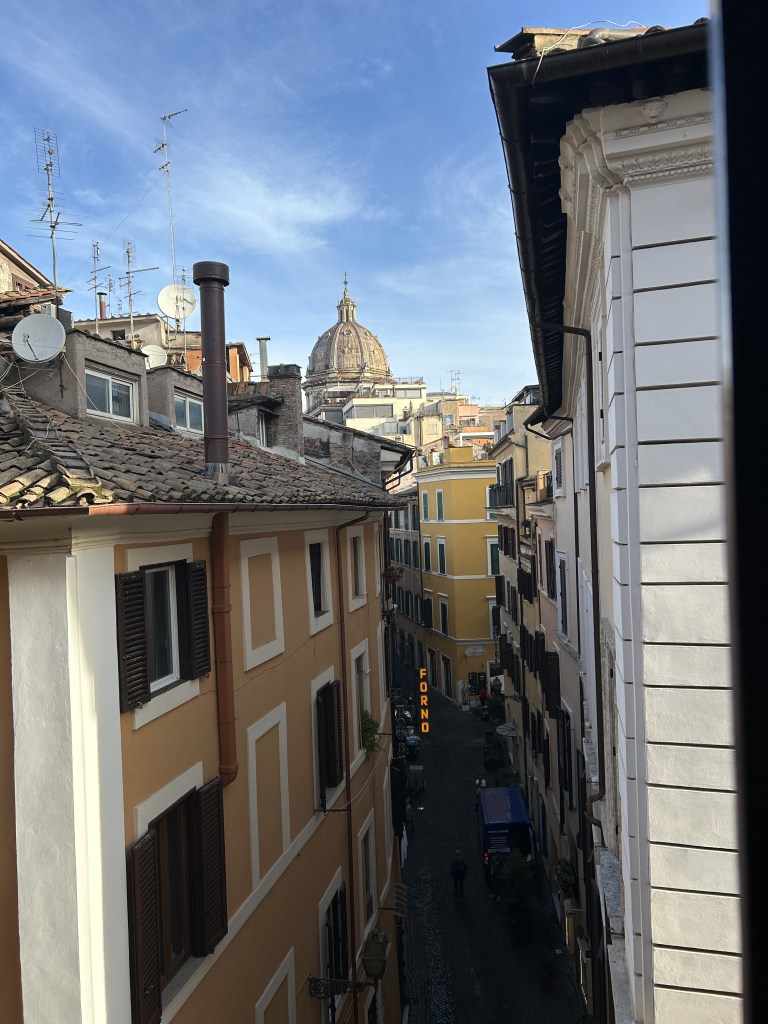
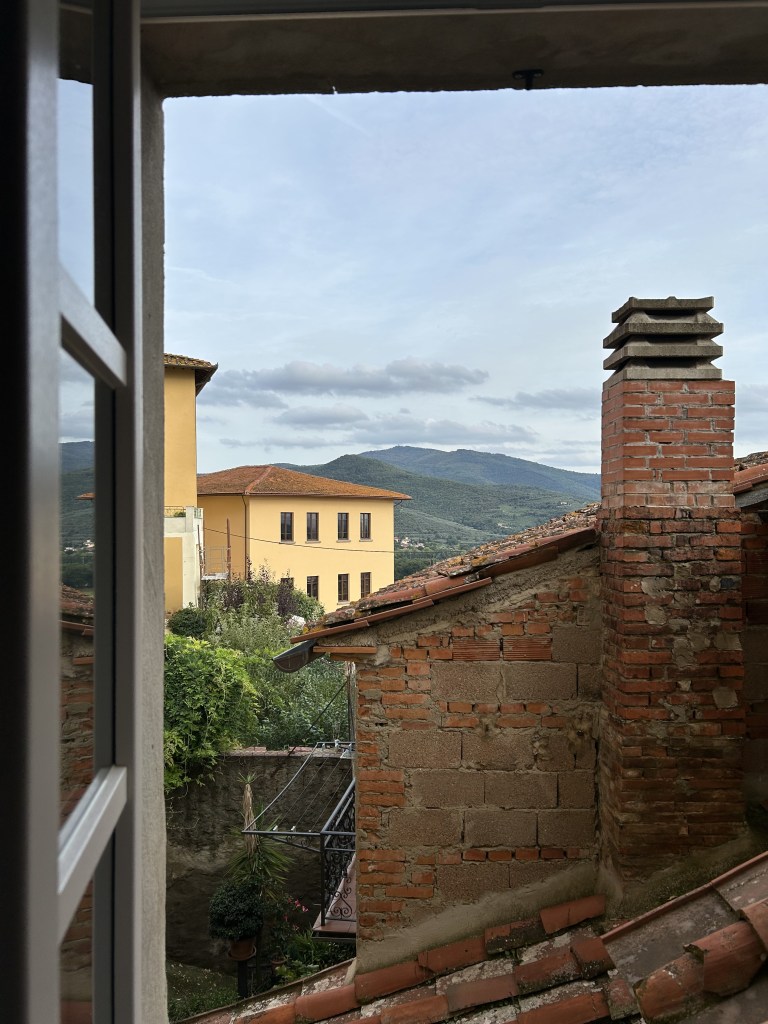
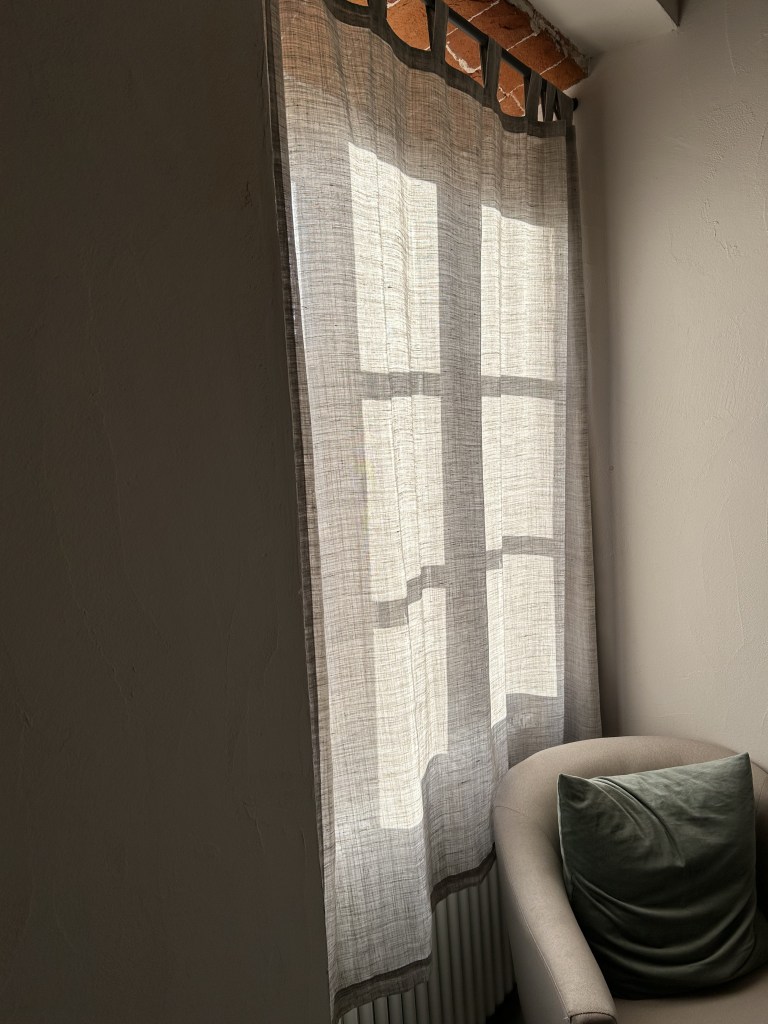
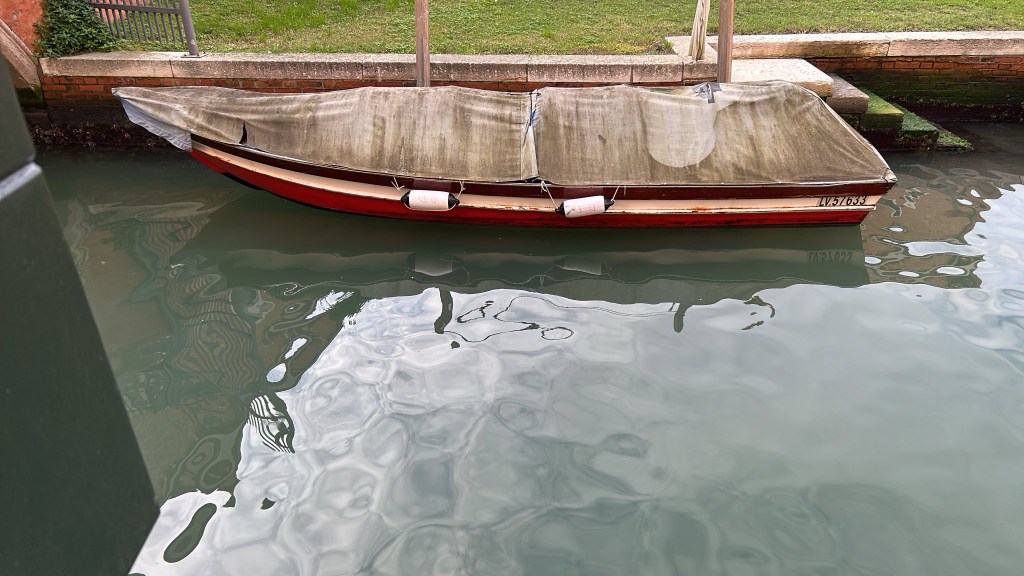
It’s odd, I know, that one of my favourite experiences in Italy is opening windows. It’s not simply the stunning views they open to: neon signed and steel-coloured cobbled streets of Rome, lushly vined and golden hills of Tuscany, neoclassical architecture of Milan, or the watery canals of Venice, but moving through the action of opening each window. The grasp of solid metal handles, negotiating the satisfying arc that releases a latch (often beautifully crafted in and of itself), feeling the smooth swing of heavy wooden shutters, both inside and out, experiencing the transformation of a view seen through the waves and bubbles of ancient glass to clear and open air—for these windows never have insect screens—and immersing the scents that blow in (freshly baked bread, brittle crush of autumn leaves, rain kicked up dust…there’s a word for this, petrichor, earthy soil, olive oiled bon fire smoke, the honey sweet miracle smell of lime trees, ocean brine, and yes, sewers, garbage, the sour mash of fermenting grape skins and dog shit). The windows are always set in thick stone walls, some as deep as my arm. When I lean out, I think of all the other people who must have done the same, from the same spot, with the same thoughts, the same impressions, the same appreciations, and I experience a sense of profound connection to the landscape, the people and the history of the place. Deep inhale. Ecstatic exhale.


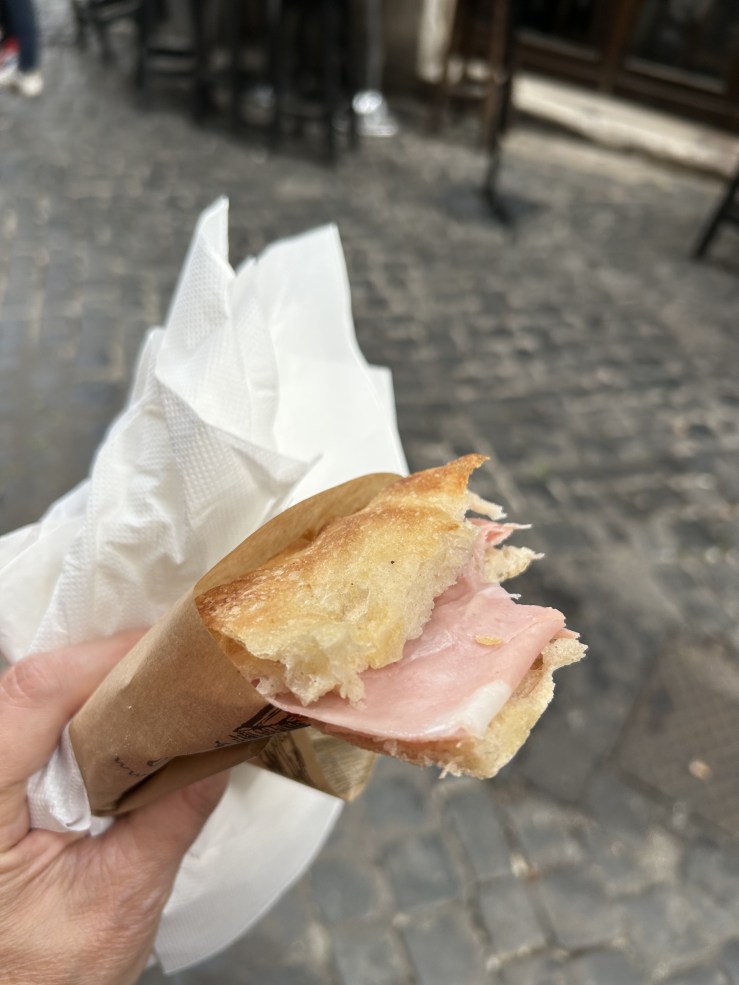
I ate and ate and ate, ingesting the full but simple flavours of sun ripe tomatoes, grassy olive oil, spongey bread, chewy pasta tossed with loamy truffles, oil cured anchovies, buttery cheeses, hard, salty cheeses, marzipan, hazelnuts and chocolate. I repeatedly experienced the transportive wonder (transporting one to where? …no, this isn’t right…dropping one into a still moment of appreciation of wonder, this is what I mean) when food is accompanied by wine. It’s a dynamic wonder: both the food and the wine change as the meal unfolds, mediated through temperature and air and textures and flavours, combining and recombining differently each moment across the lips, the tongue. How sharing this, at a table laughing with friends, friends who love you, is part of the wonder and absolutely essential to the experience.
I had more than a few episodes of weeping, unexpectedly overcome in certain moments by beauty.
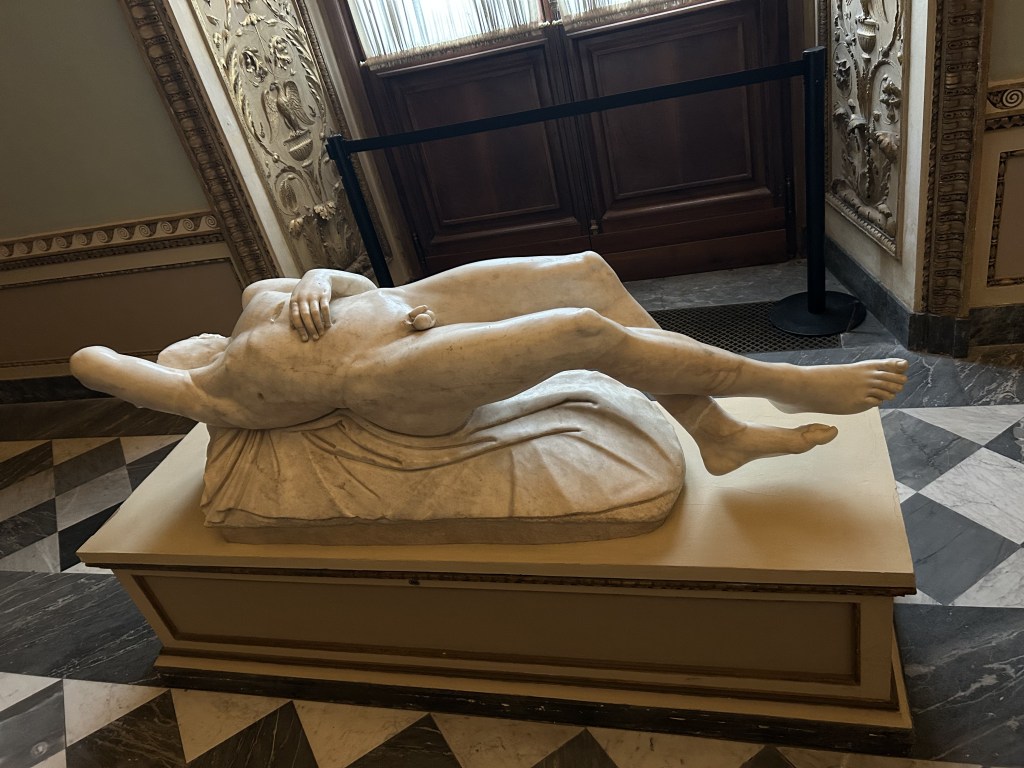
Once, gazing at the carved marble calves and feet of a statue of the fallen son of Niobe in the Uffizi2.
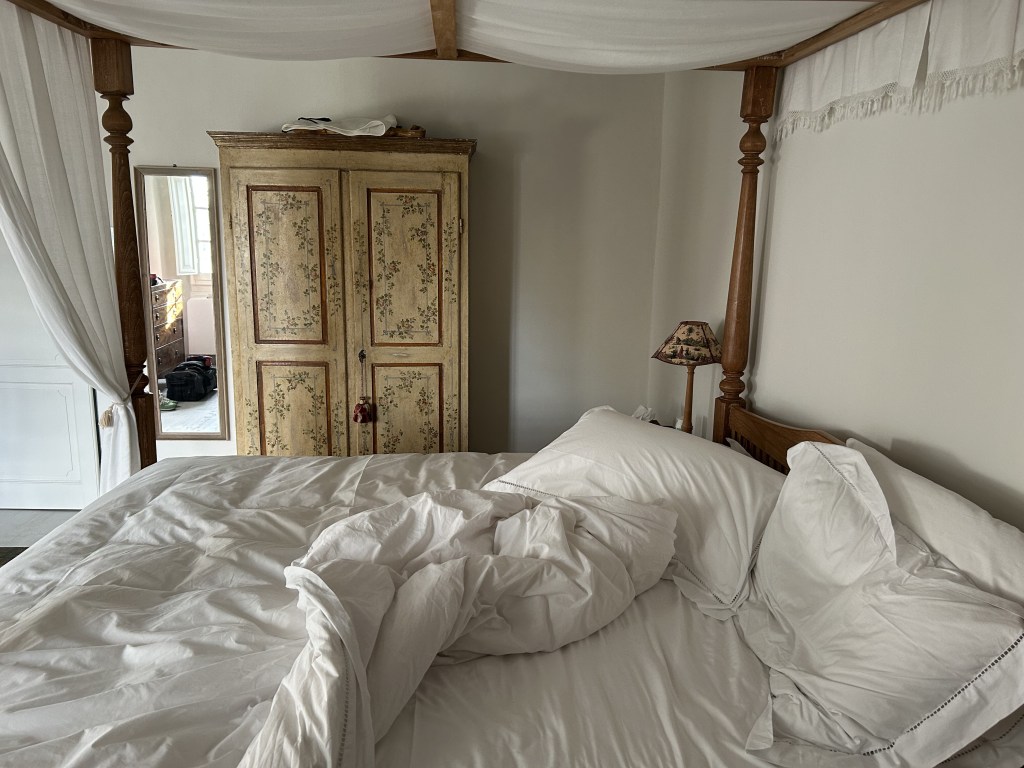
Another, listening to my friend, a concert pianist, practice Bach, Debussy, Chopin, in her gorgeous villa with a magical bed I got to sleep in, the percussions echoing the stone walls while I journaled in my notebook and copied down a poem, Brahms, written by Robert Bly.
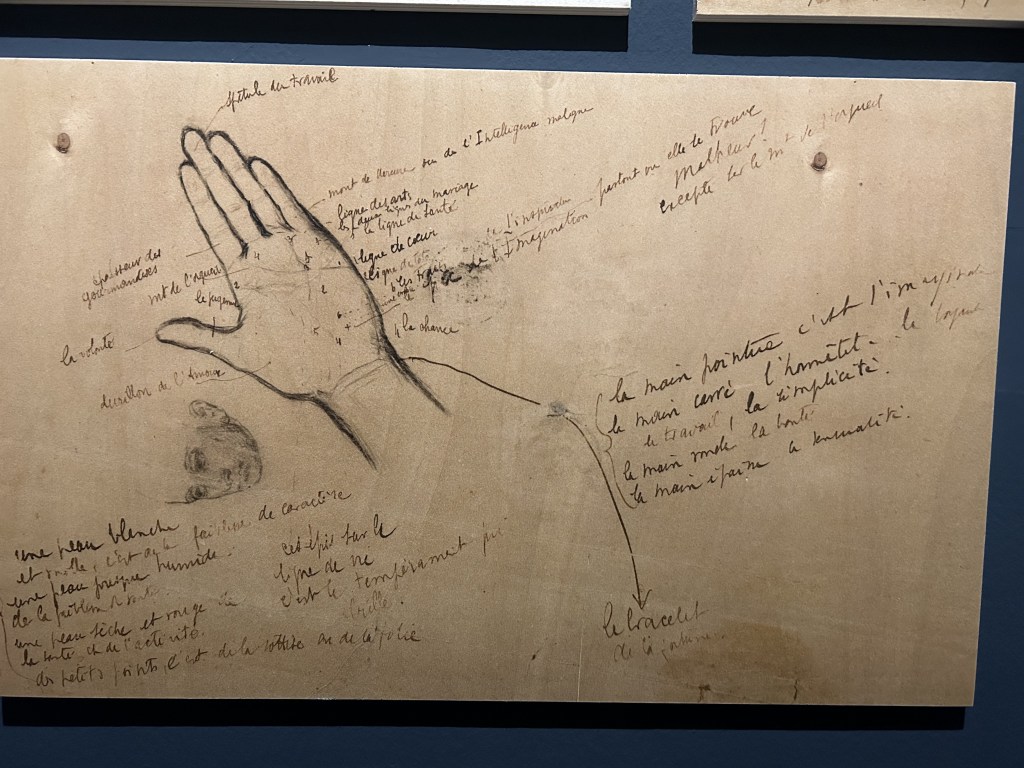
Another, reading poetic words about Picasso’s hands, written by Max Jacob3.
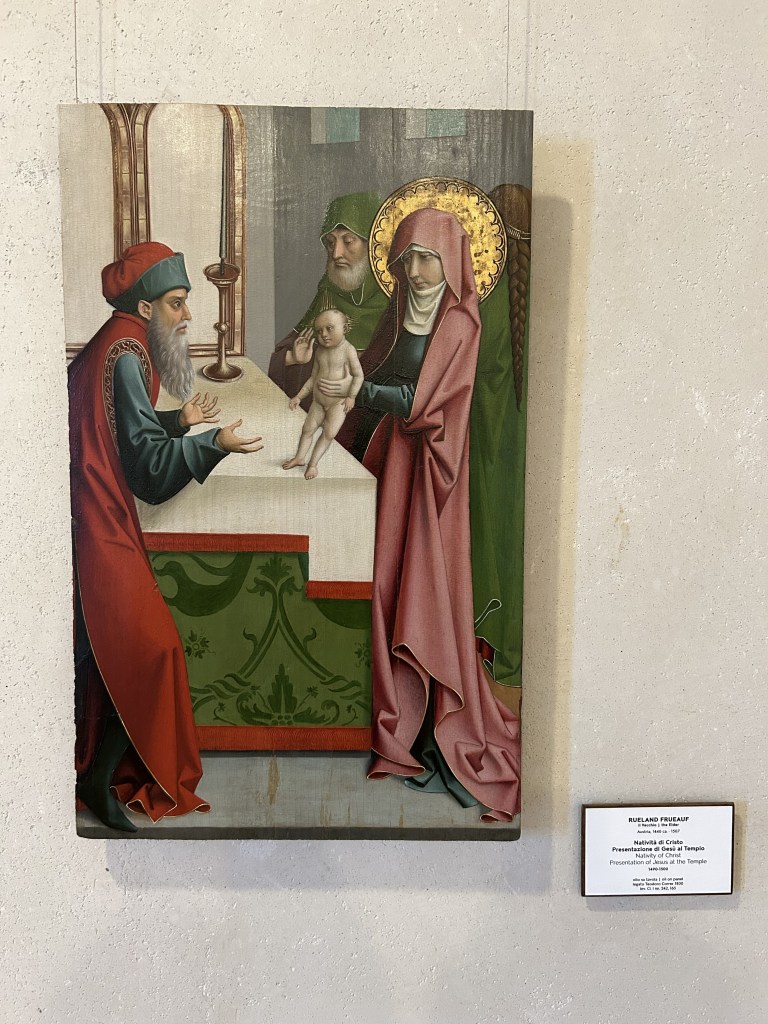
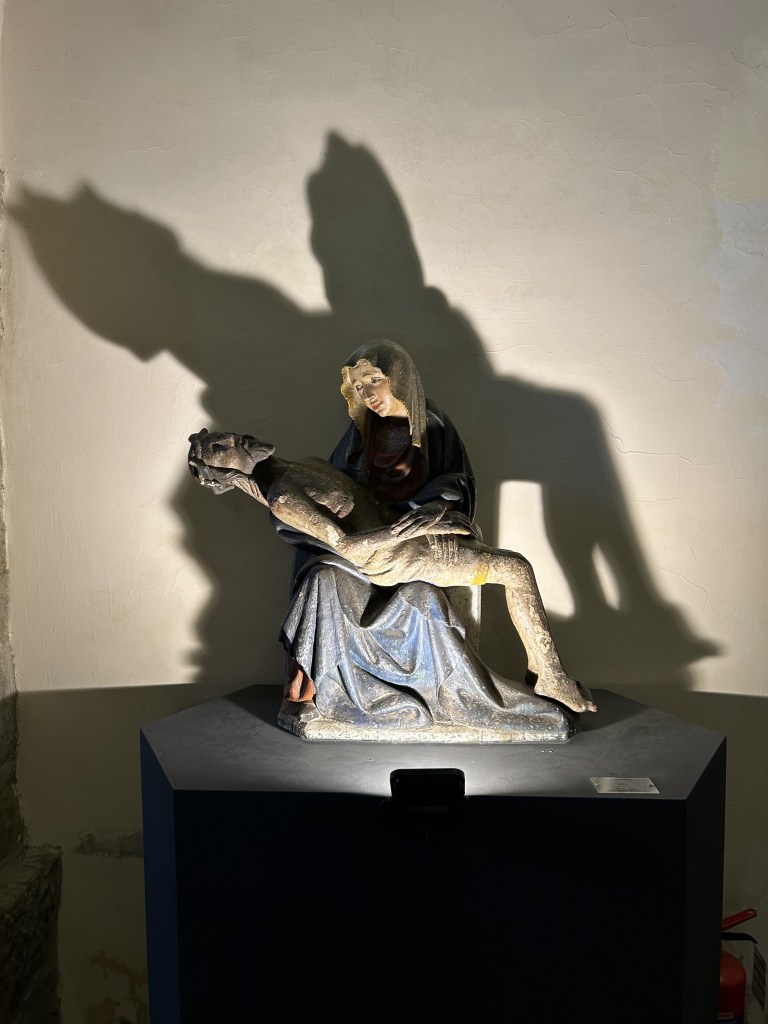
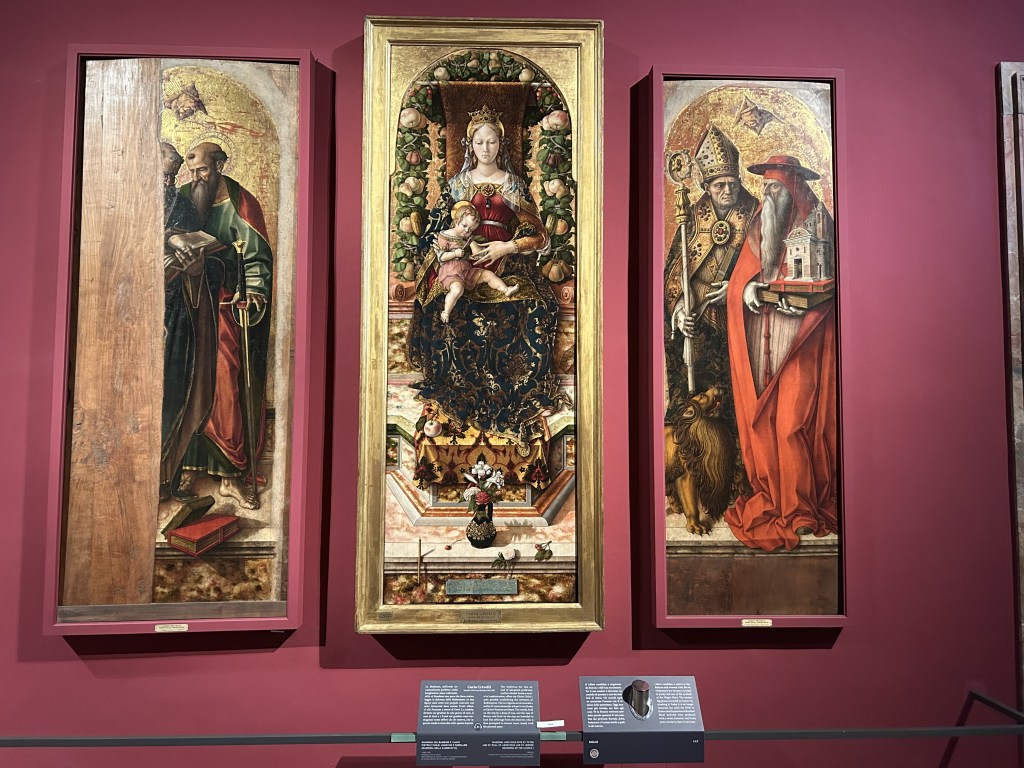
Truly mind-bending was the paradoxical viewing of classical artworks alongside contemporary ones, often in the same day, and once, in the same museum space4. I loved this jangling stimulation. Especially as a necessary counterpoint to the complete saturation (assault?) of the same composition, the same colours, the same story, of the Madonna and Child, over and over and over again. It makes one appreciate anew how dominant that story has been to the exclusion of so many others.





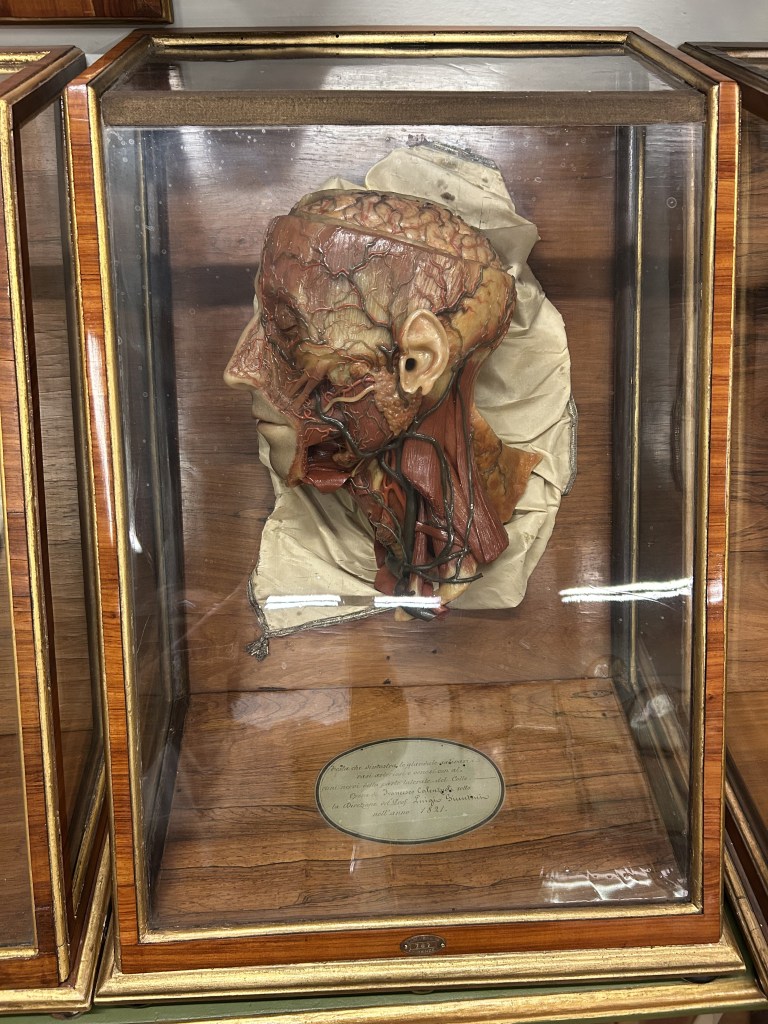
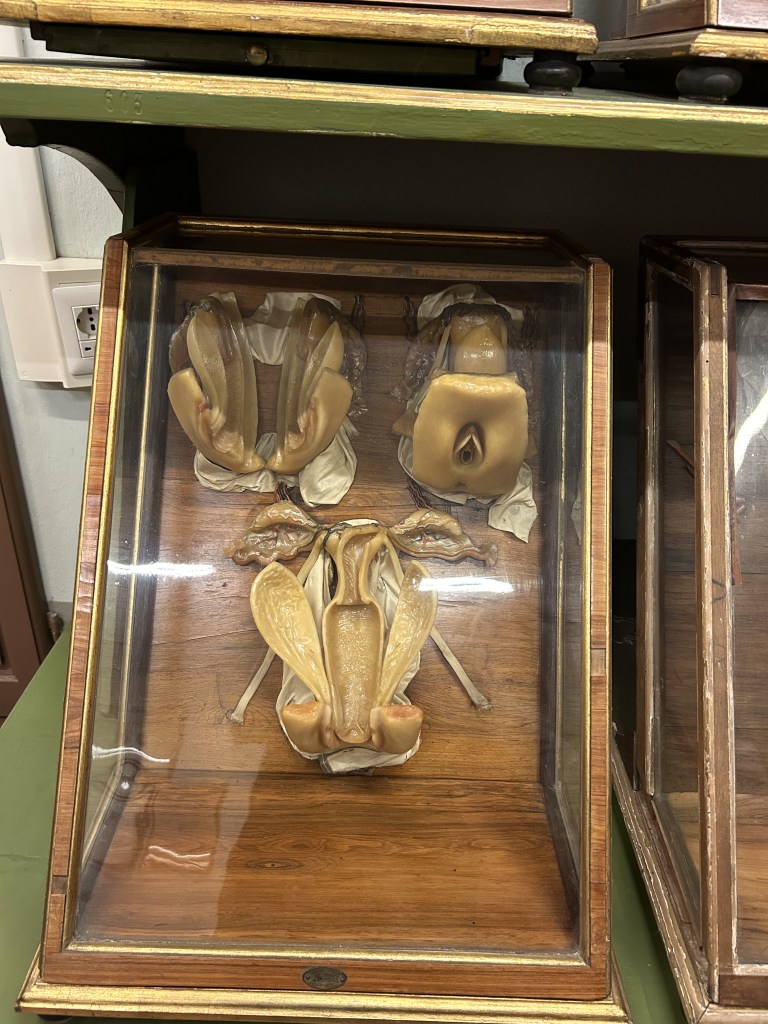
Lillian (daughter #1, studying in Milan this semester), joined me for several different legs of the trip, including Florence, where we toured La Specola, the oldest scientific museum in Europe. I had read about the wax models of fruits there, in a book, years ago, The Land Where Lemons Grow : The Story of Italy and its Citrus Fruit, by Helena Attlee. It was fascinating and absolutely stunning to see the intricate artistry applied using beeswax and pigments to create models of plants and animals and human anatomy to serve as teaching models. The attention and accuracy of detail blew my mind: the brain, the circulatory system, the nervous system, the reproductive systems….all the teeny tiny veins and arteries and lymph nodes meticulously recreated in coloured three dimensional form. For 3 Euros, we joined a tour…in Italian. I didn’t understand most of it. Still, fascinating to see. There were also cute little dioramas of scenes from the plague. Macabre, I know. I explained to Lillian how horrific the smells would have been. Interestingly, this subject paired nicely with the exam she was studying for, European economic history, where, alongside war, disease played a major role5. Anyway, this exhibit brought home the idea that art and science are not separate entities, but rub up alongside each other companionably.

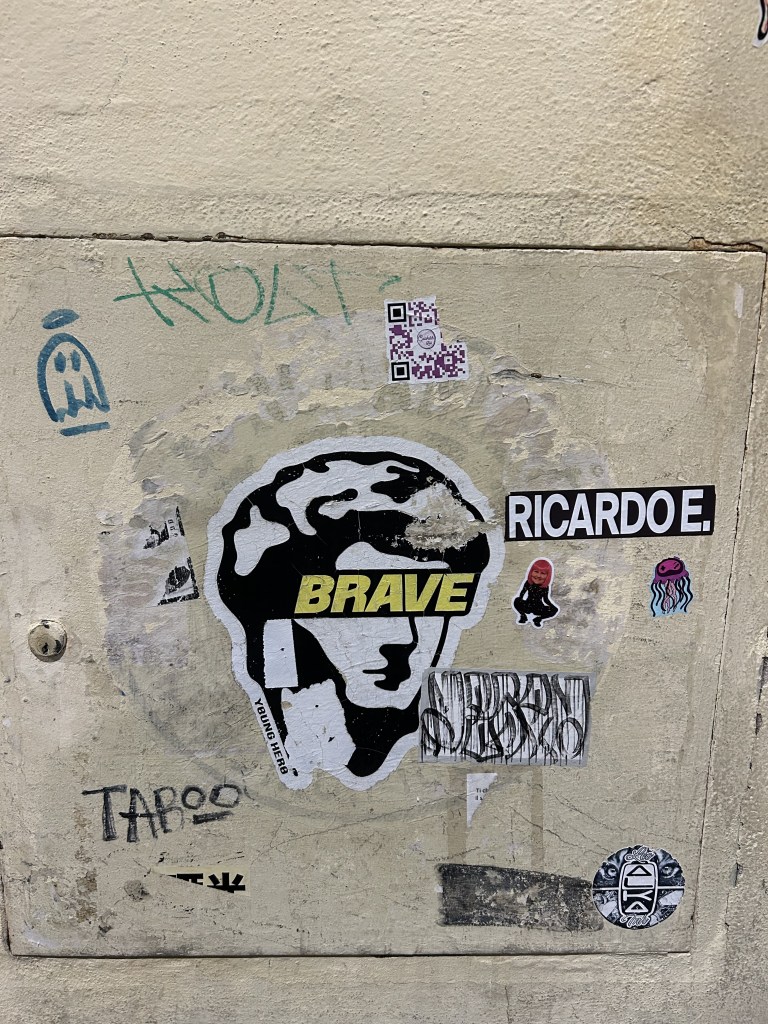
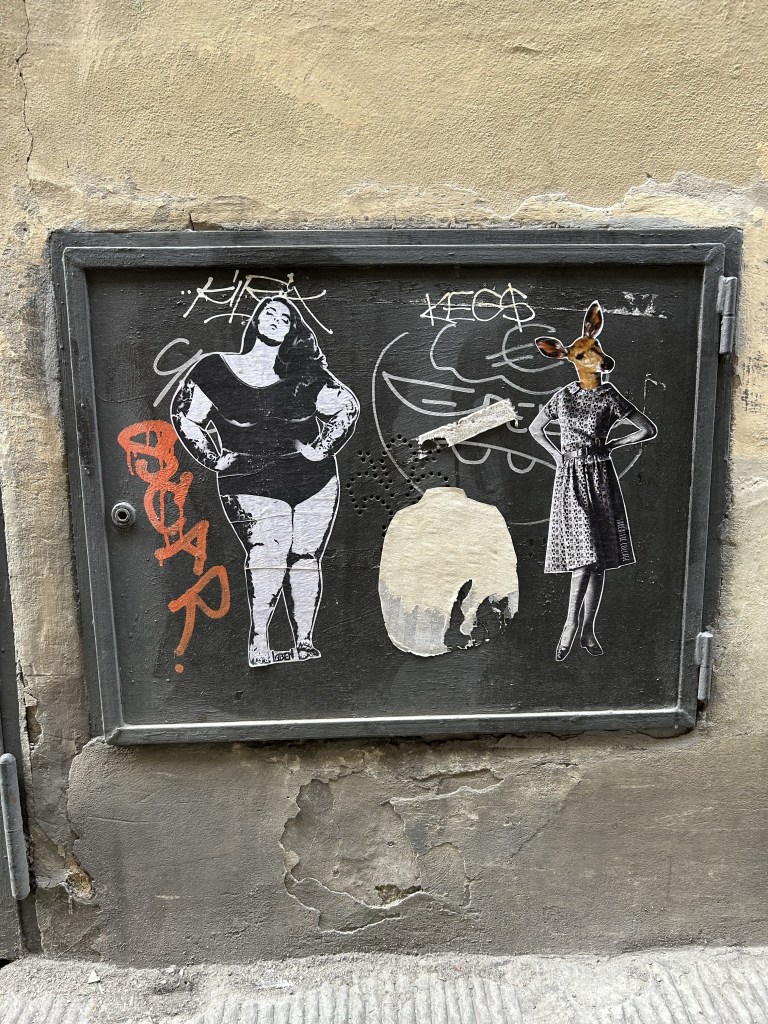
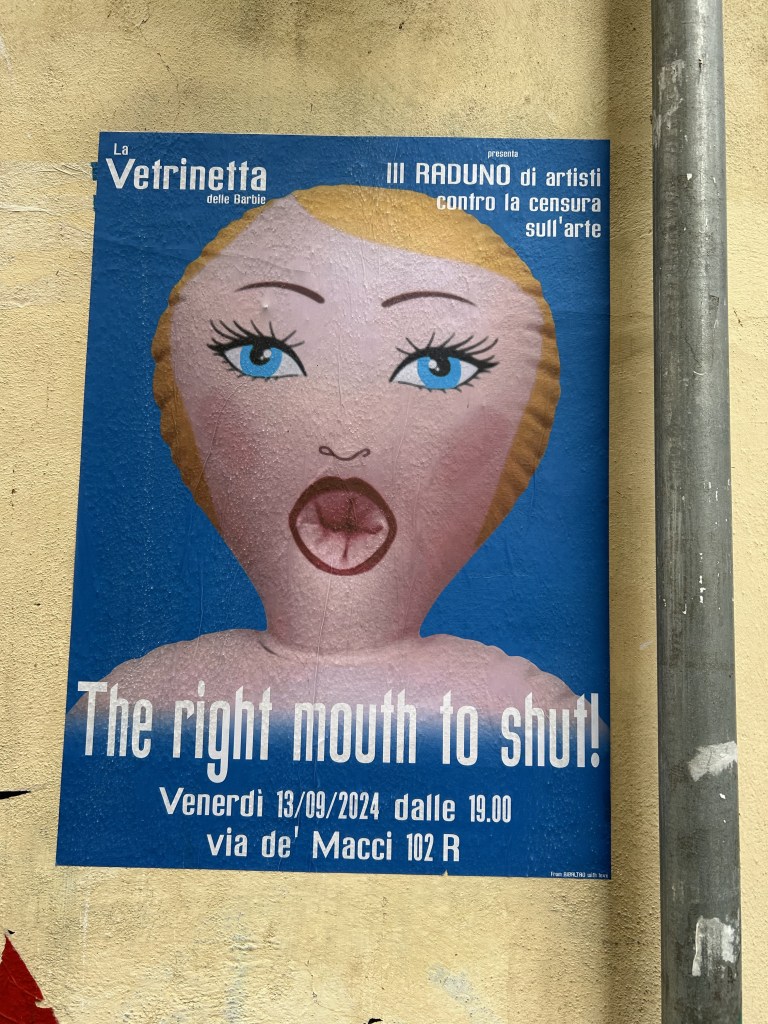
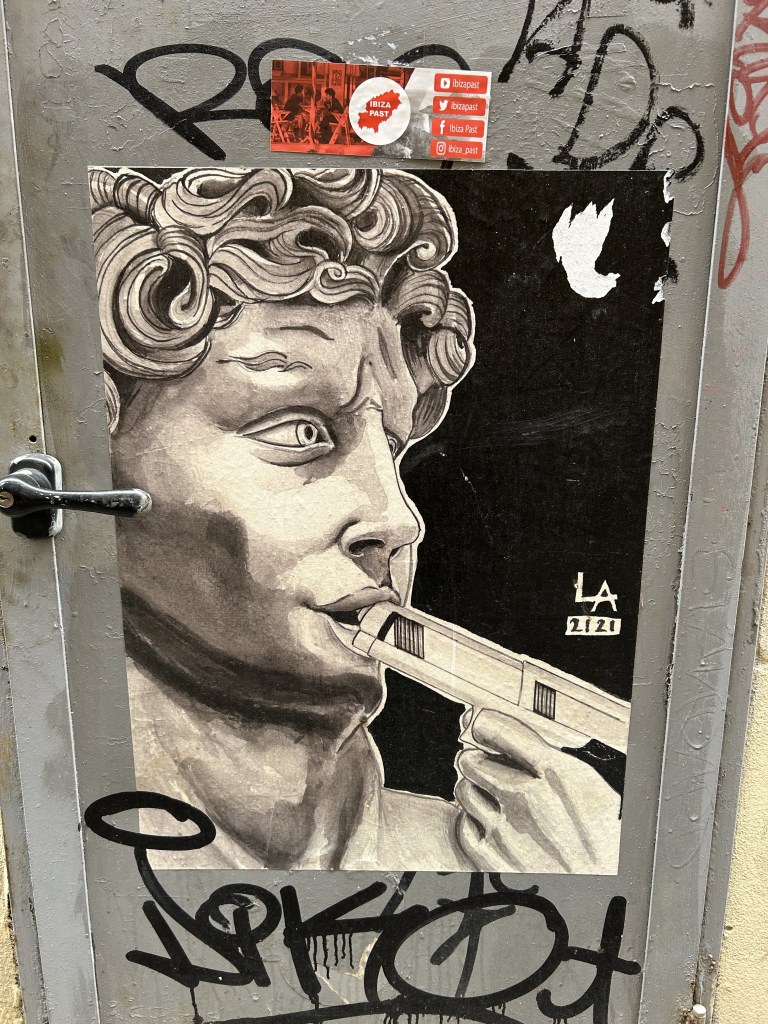
Here’s a selection of “things I saw on the walls in Florence”:


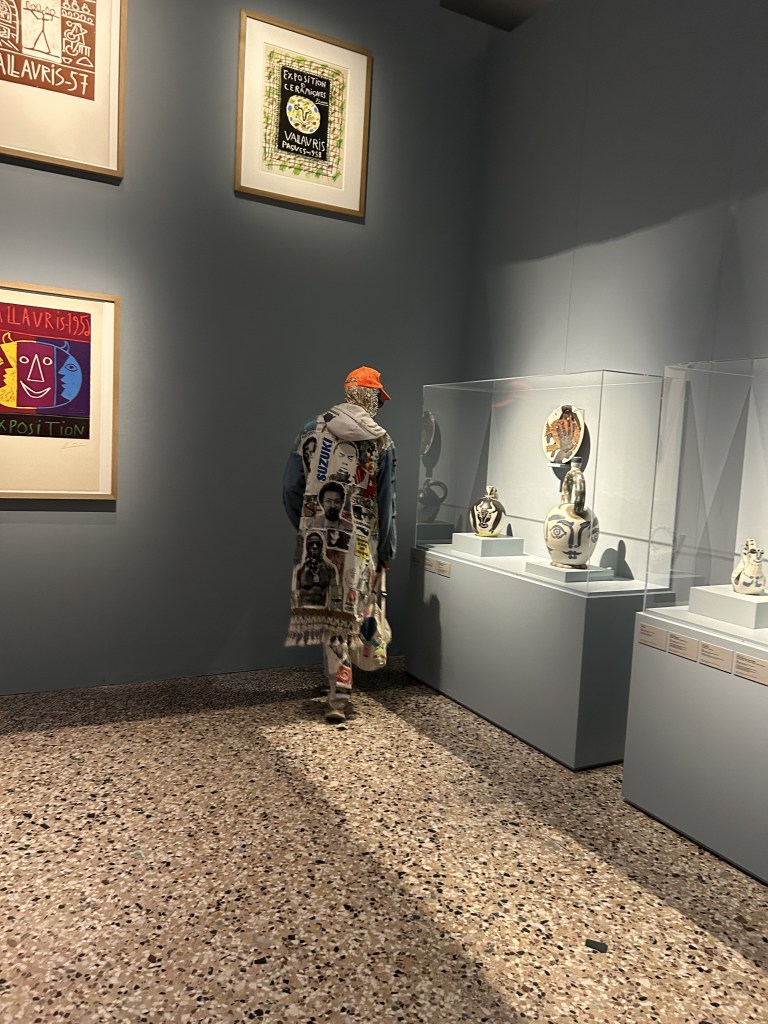
Here’s a picture of a person wearing an outfit that was just as beautiful and could have been part of the Picasso exhibit. We gazed at the same painting for a long time, standing side by side, and I really wanted to tell him how impressed I was with his outfit. But, I was too shy to say so.

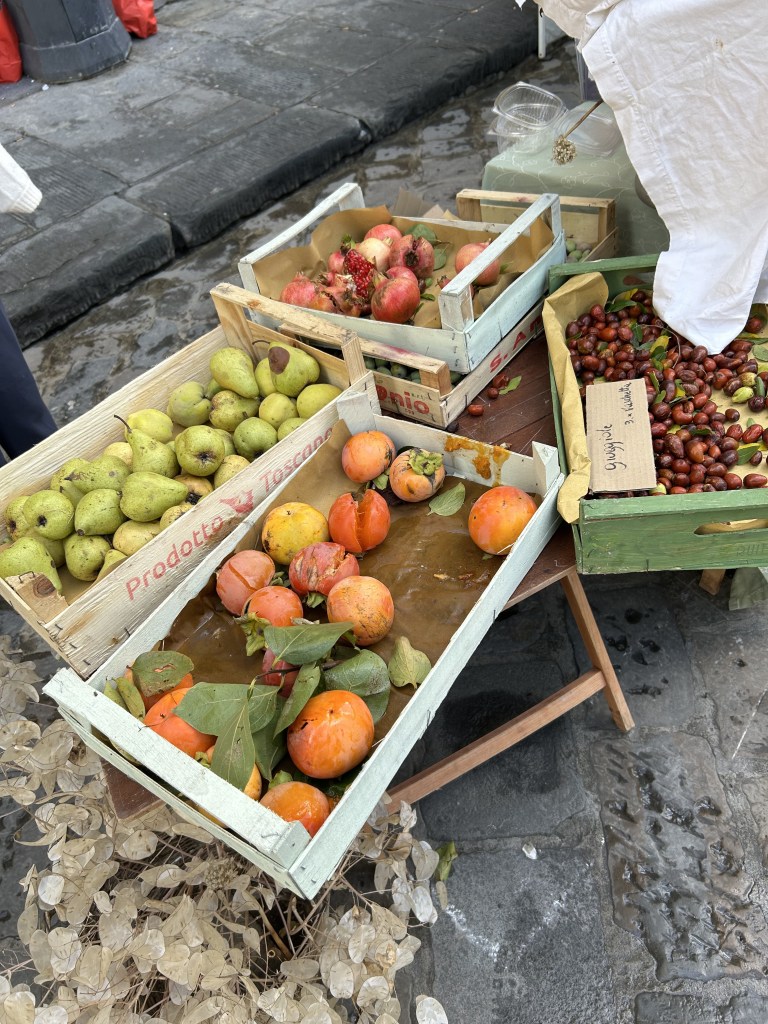
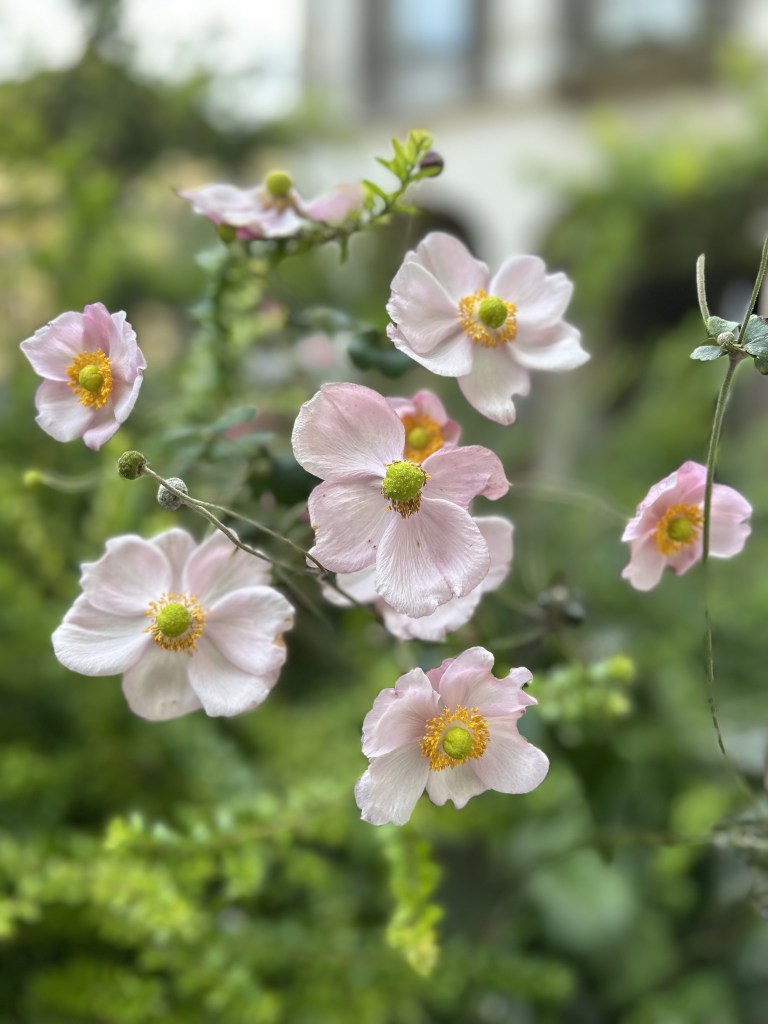
Also, so much beauty in natural form…something I began to miss amidst the cement cities and throngs of people.
It was impossible to write much while I was away…vibrating with so much stimulation, it was difficult to settle into any kind of focused reflection. Just tried to attend, be present and capture and take everything in. Again, I carried my pencil crayons around in my backpack, never once using them. I’ll have to make up a word for this, the act of taking art supplies on a trip but never using them…a botch-batch? non-accoutrements? artfail? I’m too tired, I have no idea. Surrounded by so much beauty and creativity and humanity, I couldn’t help but notice the manufactured green spaces, the cultivated farmlands, the hustle and bustle of humans living densely, compactly, layering upon one another with bricks and mortar and sweat and tears and laughter. I craved the lake and the sky and the horizon of home. Perhaps this is why my favourite part of being in Italy was opening windows.

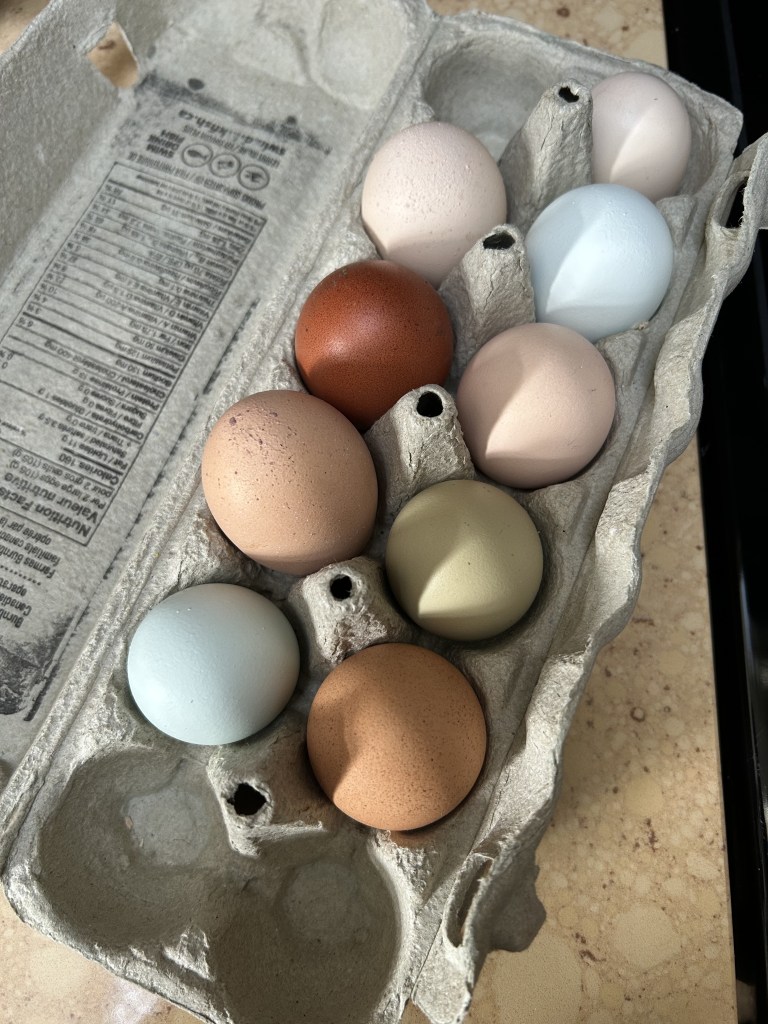
This is the view I crave. And a dear friend stocked my fridge with cheeses and milk and these gorgeous eggs from her sister’s hens for when I returned home…when I opened the carton I teared up again…for these too are beautiful. Also gratitude… for it all.
- I returned to work Tuesday, hundreds and hundreds of emails. 807 emails. ↩︎
- Dying Niobid, Roman Art, 2nd century CE, the male figure is depicted on the ground in agony, struck by the arrows shot by the sons of Latona. For some reason it was the perfection of the figure’s legs and feet that really moved me. How they’re suspended in the air, as if, were I to reach out to stroke a calf, I might have felt the warmth of life depart the body. ↩︎
- From the Palazzo Reale Picasso exhibition notes: “In support of a palmistry study of Picasso’s hand [1902], the poet notes in a prophetically: It’s like the first spark in a fireworks display/…/This kind of living star is only rarely found in predestined individuals […] Aptitude for all the arts”. I have no idea why this made me cry. ↩︎
- These photos were taken from various museums, but the modern icons in conversation with Renaissance works were made by Francesco Vezzoli to create a site-specific exhibition in the Museo Correr in Venice. I was visiting the library museum but my ticket, serendipitously, afforded entry into this museum as well. The blue lady was in the courtyard of the Airbnb in Venice, Involucro Yves Klein, by Elia Alunni Tullini. ↩︎
- Plays…considering pharmaceuticals. ↩︎
 Process Peace