
When I went to elementary school in the 70s and 80s, it was vogue, fashioned after curriculum direction in the UK, lessons on grammar and syntax be removed from the curriculum with the belief (not proven with time) the lessons would simply assimilate through reading, exercises in comprehension (meaning making), and natural conversation.
And a science focused career further limited my exposure to language construction (blunted it more like. Punted any raw, sensual subjectivity, the glorious immersion of being human in a living world, to a cold field of disconnection and distanced objectivity, but I digress). The result: I must always look up the definitions for parts of sentences (adverb (?! yes, it’s true), gerund, participle), the application of verb tenses and rhetorical terms (these never stay in my head, it’s a completely foreign language). I’m only recently (last couple years) conscious of the conceptual gymnastics syntax enables one to perform.
But my lack of education is not what I want to write about here today. Instead, in the way of shimmery near-rhymes, I want to describe my process learning to use syntax as a way to mine my intuition. This practice (nascent) is cultivating my writing, slowly, slowly, so slowly, making it, if not more beautiful, certainly more textured, possibly (hopefully?) more complex.
Importantly, the practice disciplines thinking. Alters perspectives. Allows the mind to become supple. Open.
There’s a June Jordan quote tacked on the corkboard in front of my writing desk that captures this sentiment so much better, “The syntax of a sentence equals the structure of your consciousness.”
By intuition in this context, I mean what the subconscious mind is telling you, learning to trust it knows so much more before your conscious mind does. Responding to writing prompts, I put my pen to paper and let the words fly. In this way, something surprising, often beautiful—an image, a metaphor, a sensory cue—always rises to the surface (usually only at the very end of the exercise). Often, I’m left with a slightly baffling fragment and no clue as to how I might proceed or stick it together with another section of text (and attempts to force it really botch the whole thing up). This is when applying syntactical techniques may be used to open a window for creativity (and intuition) to breeze in.
Here’s what I mean (so floaty in the abstract mind space, my apologies, let’s get grounded). Syntax is simply the arrangement of words and phrases to create [a] well-formed sentence1. I’ve been practicing how to write sentences, gratefully working through exercises posted so generously by Nina Schuyler on her Substack Stunning Sentences.
Nina’s exercises break sentences into their component parts, grammatical and syntactical, and she sequences and names the parts so they may be followed as a template to slot in your own words and thoughts. I work through Nina’s exercises each week (well, I try to keep up). I’m too shy to post them there (and I don’t always succeed in my attempts, often capturing only 3/4 of the layered pieces that make the whole), but the practice is so helpful to me.
Start with a base clause: grind the meaning of the sentence down to its essentialness, who is this about (subject), where is it taking place (setting) or what is happening (action). And then, by erecting layers of structure (syntax, grammar, rhetorical techniques), complexity of meaning, depth, a resonance imbued with life and rhythm is, architecturally, revealed.
The layers of structure move a reader through the writer’s thinking and meanings using, as Francis Christensen’s 1963 essay, A Generative Rhetoric of the Sentence explains, levels of abstraction or generality, movement (directing the reader’s eye to earlier or later parts in the sentence). Christensen’s theories enriched John Erskine’s. Here’s a quote of Erskine’s that I love, from a 1946 essay, The Craft of Writing, quoted in Building Great Sentences by Brooks Landon:
“What you wish to say is found not in the noun but in what you add to qualify the noun. The noun is only a grappling iron to hitch your mind to the reader’s…The noun, the verb, and the main clause serve merely as a base on which meaning will rise. The modifier is the essential part of any sentence.”
Circling back to intuition and tying it in with Nina’s exercises, working through the sentence templates (grammatical, syntactical, rhetorical) I am forced to feel my way through the possibilities of how the original thought (could be the stripped down base clause) might expand. From my own free writing, I can select an image, a metaphor, a sensory cue, an action, extract it from my draft and let my intuition, carried through the templates, show me what my mind senses before I really even know.
In a recent post to The Red Hand Files, Nick Cave responded to a question about creativity, being stuck, and art making, which again, explains this better than I can:
“As a songwriter, I have come to understand that the more I try to make art that somehow reflects what I perceive myself to be, or the identity I wish to project upon the world, the more my art resists. Art doesn’t like being told what to do. It doesn’t like me getting in the way. When I attempt to impose my will upon it, the work becomes diminished and art takes its better ideas elsewhere…[Art] insists that we retract our ego, our sense of self, the cosmetics of identity and let it do its thing. We are in service to art, not the other way round.”
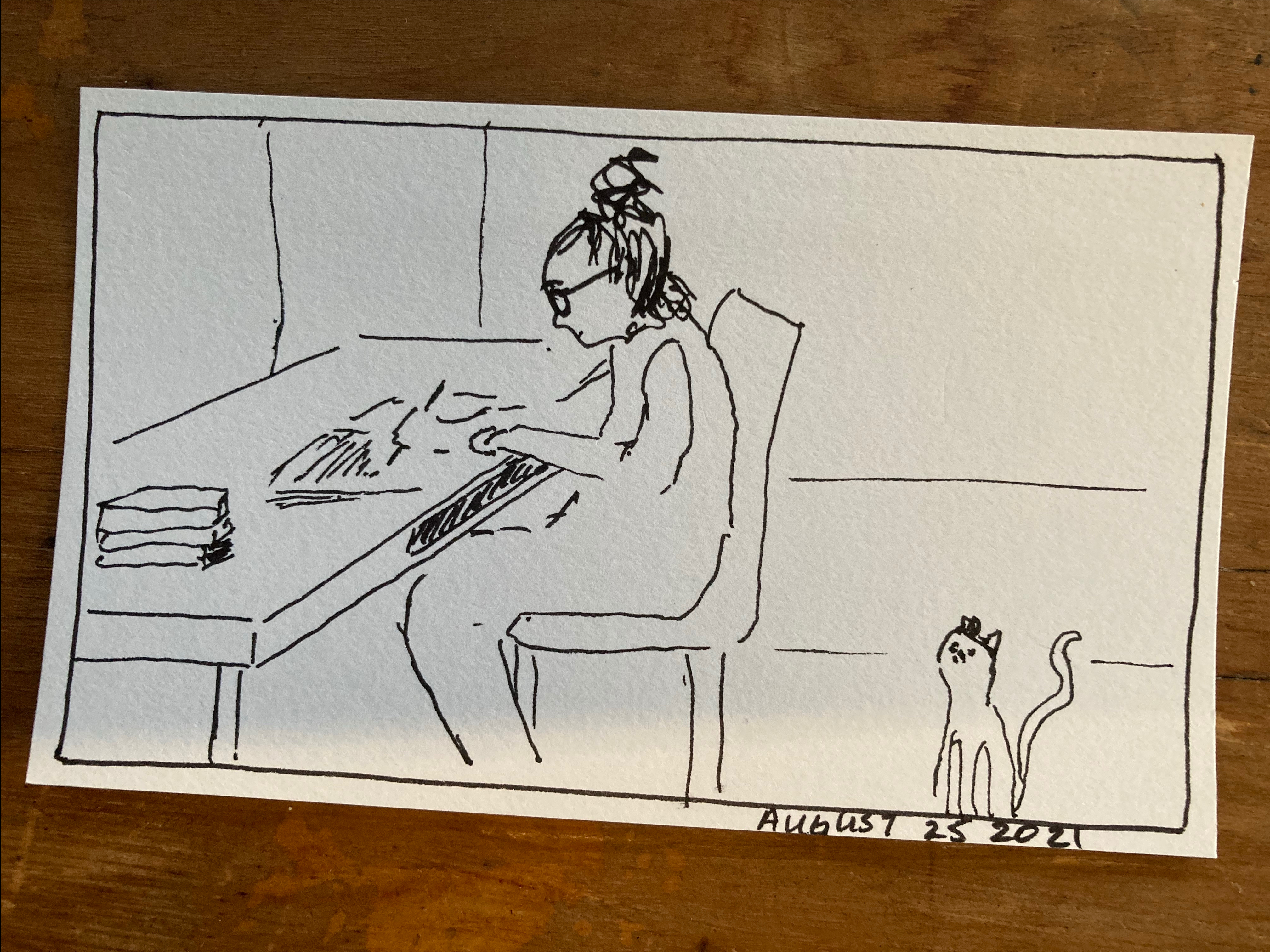
Practicing this way is very slow. I sit and think a lot more (imagining) before attempting to fill each sentence component on the page. I switch to pencil for these exercises – there’s a lot of rubbing out, a lot of cross outs too. It feels a lot more like how I feel when I write poetry…the process of intentional writing I apply to poetry. It taxes the brain, but in a good way, a way that alerts you, wakes you to deeper meanings on offer.
But there is a richness of material being laid down. Suddenly every word (or component) opens so much more potential for something larger, more meaningful, more complex. It shows me what I’m thinking, before I even know myself. And this feels exciting. And pleasurable.
How classes on reading comprehension were ever severed from syntax instruction I will never fathom. Subject for a different rant.
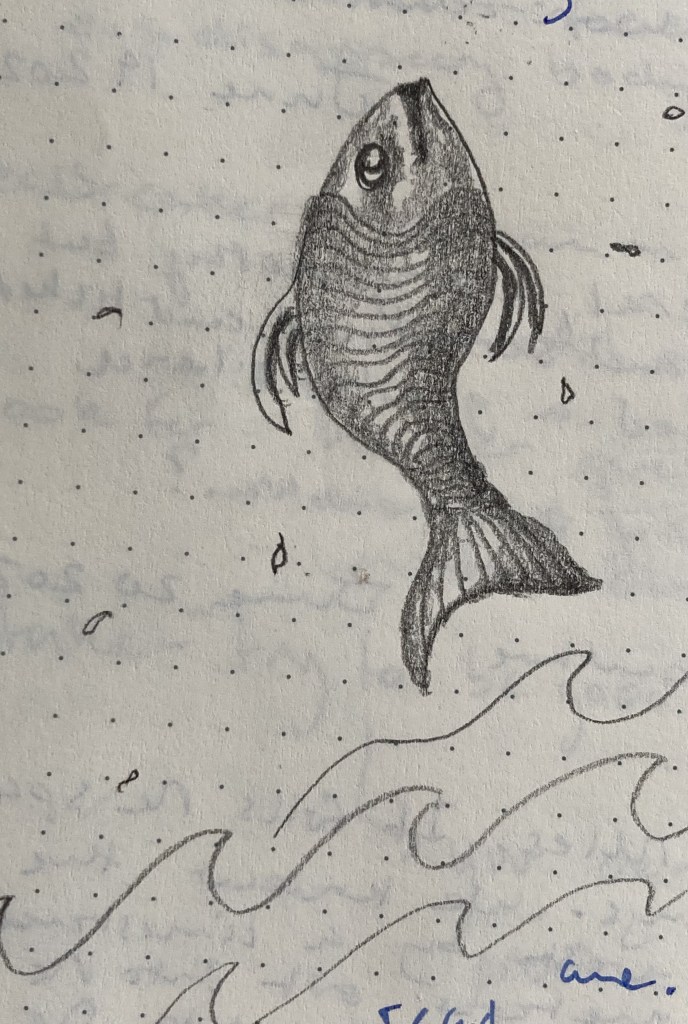
Slowly, slowly, slowly I am learning. No longer gasping for breath, a fish out of water, just a process of learning to swim. And the education, though painful at times, is a joy.

1 Discovered syntax etymology is from the late 16th century, via French or late Latin from Greek suntaxis, from sun- ‘together’ + tassein ‘arrange’. What a delightful riff on the warmth of a sun.

 Process Peace