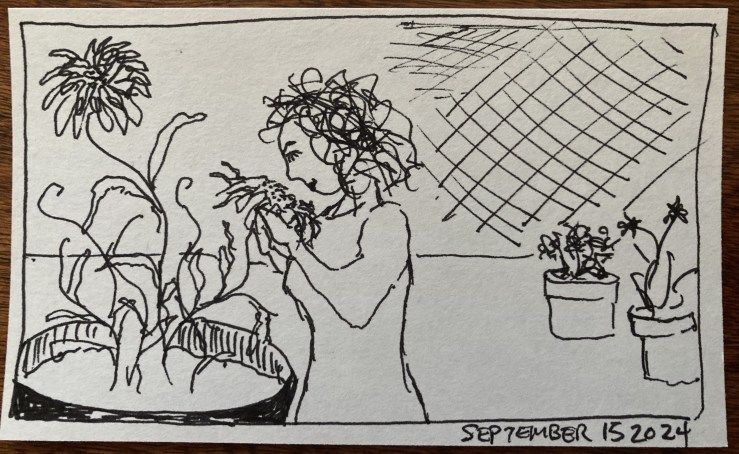
Tune(s) Up

Thank you for your many messages. They guided my approach—which I’ll summarize below—revising A Marriage: Framed (CNF <2500 words) AND showed me to trust my own words and my own process. Your belief helps me believe. A blessing.

There was a lot of tinkering (ink -er-ing) trying to take this story to top level writing technique. I continue to tinker. Top level is…a dream, a ceaseless chase. And yeah, the chase really is a lot of fun [Insert: series of horn blasts and voice signals and Tally-ho! Here we go!].  

Last month, I posted my experience pruning A Marriage: Framed, taking it from 3770 to less than 2500 words. The process was fascinating because as I cut the words down, the focal point shifted, a spin that forced the painful emotions at the heart of my 27-year relationship with my ex to surface. Emotions I’d suppressed for decades.

Struggling to understand and move those emotions out of my body onto the page transformed them into “an object” (a writing piece) outside my body that I can interact with and control. I’m less “imprisoned” by my emotions, if that makes sense. I feel almost as if the rewriting of the draft I completed last month was a “therapy” draft. The story moved from being deeply subjective to objective, enabling me to turn to tackling the craft and technical aspects in the writing with a cool(er) and practiced distance[1]. This latter process, I’ve discovered, is essential to move the emotional therapy draft through a series of systematic style techniques so the artifact might approach a work of art. 

I wrote about my nascent practice and understanding for how to work with the subconscious as part of creative writing process in a post last March. Today, I want to build on that earlier exploration with some concrete examples because I’m trying to understand and practice tangible methods for working with less tangible materials. Silence. Air. Thoughts. Dreams.  I was thinking about how a musician works with the silences between notes to modulate pitch and tone, melody and harmony; how a sculptor carves a block of stone to encase a shape of air.  And my mind slid from that image to a memory of being captivated by a sculpture of Leda and the Swan when I was in Italy last fall.

I was rushing through the monumental halls on the second floor of the Library of Saint Mark in Venice in order to see the Mappa Mundi before the gallery closed. Speedwalking past innumerable marble busts, I stopped abruptly, struck by the unique portrayal of the infamous myth, an erotic story about the god Zeus, disguised as a swan, seducing the Spartan Queen Leda. The question about the nature of the seduction, whether coupling between the two was consensual or not, revolves the ages. This specific statue, its image, its energy, has stayed with me because of its beauty, yes, but also its ambiguity …for me, this sculpture is tangible object and emblem of desire-resistance all at once. Leda and the swan are carved to their moment of intercourse and Leda seems, at least to my eyes, both taken by surprise, as if she’s not quite ready to take on a god (she pushes the swan away) and surrendering to her attraction and desire at the same time.  

Roman variant of a possible Attic original of the mid 1st century BC Giovanni Grimani collection, 1587

I hadn’t appreciated why this sculpture has enchanted me for more than a year, until today, when, sifting my thoughts for something concrete (well, marble in this case), this memory surfaced. By embracing the complexity of the original myth and removing the layer of Greek mythology, I choose to think of this sculpture as a symbol of unification between spiritual and human worlds. When creative writing, I feel the spiritual world, or divine might be a better word, is a part of (or accessed via) the subconscious. The vibrating energy I can feel as I draft using stream of consciousness writing (read: writing without thinking too much) is intuition. Intuition is much like a tuning fork. I’ll try to explain this shortly.  

I’ve missed many of the signposts from the subconscious in my writing drafts—they arrive as words, resonances between words and as sensory images. I’m learning how to identify them and practice how to work with them and preserve them to create a net of story words that communicates something beyond words: feelings, energy, magic. Art.

Here’s an elegant and far more beautiful articulation for what I’m trying to say:

“Story form is an object, a translucent, shimmering thing with words tacked to the surface of its swirling involutions. The words glitter with their own reflective colouration; in them you see the momentary reflections of other words. Wires as thin as gossamer connect the words with more words on distant parts of the structure where they set up new colonies with flags, banners, replicas, and maps of the whole. Spin the form and the same words appear in flashes, the eye registers their rhythmic insistence[2]. It is wonderful and miraculous to watch.”

Excerpt from the essay, Anatomy of the Short Story, in The Erotics of Restraint, by Douglas Glover.

 Tune Up Techniques

My revision was guided by generous writers and readers who offered their love and attention and time to enhance my piece. I’ve said it before; creatives work in community. I’ll write more about that in December. My learnings I write here derive collective wisdoms of too many people to name.  Thank you.

Ideally, or shall I say, if this were easier, I might have started revising the Macro aspects of the piece—story, plot, characters, setting, points of view—then moved to the more Micro levels of paragraphs, sentences, rhetorical devices, syntax, diction.

But that’s not how it worked in practice.

There were the metaphors and the patterns and the desire-resistance tensions and the images that slid to occupy both macro and micro levels and, most important, all the space vibrating between. That’s the art object space, the space of Leda-swan. It’s an easy space to get lost in and an easy space to miss.

My tune up process was messy, not linear. Nor did it happen in steps, though describing the process here necessitates a sequential recounting. Revising was pressured by the word count cap, 2500 words max. The restriction served the writing in many ways by forcing disciplined compression (of words, sentences, images and ideas).

The process felt like persistent twisting, moving around and up and down and through the piece, working to understand my intentions and meanings, then shifting sections here and there, and tweaking here and there, and slowly, slowly, slowly, the piece contracted round an essential essence of tight emotional communication, complete with shimmery swirly resonances, into story art (ish…I’m still practicing).

Working with Vibrations

Ok, first, two indispensable applications I think I’ve failed to post on this blog, probably because my use of them is so integrated with my writing process I’ve neglected to emphasise my reliance on them[3]:

  • Word Hippo (thesaurus, word tools, etc.)
  • Online Etymology Dictionary – I love how they write on their site (my bolding),  “Etymonline aims to weave together words and the past, answer common questions, and sow seeds of serendipity. Sowing seeds of serendipity is exactly why and how I use this site. It’s a creativity generator.

Choosing the right word requires deep attention to what it is I want to say (what I intend a sentence to mean), the connotations I intend to (try to) control in readers’ minds, but also how I wish to communicate it. Choosing whether the flavour of communication should be sweet or bitter, whether the texture of communication should be hard or soft, whether the sense of communication might be cold or hot.

Here’s an example. In the original longer draft, I had an entire paragraph describing the situation where the husband explains he won’t allow his wife to attend the funeral of her friend’s dad. When I cut that paragraph down to convey its essential meaning in one sentence, I wrote, “[He] embargoed my attendance at a male friend’s dad’s funeral believing my intent was seduction.”

Ok, that word embargoed practically leaps off the page with melodrama and elevated (snobby) language. Instinctually I disliked it, but it captured the essence of meaning I was after, which was restriction or “not permitted”. The vibration of my distaste of the word (in this context), even though it had the right meaning, signalled—and I should explain, this feeling is super subtle, very easy to ignore if I’m not paying attention—there might be a deeper meaning.

I sat with the word quietly and patiently and questioned it, exploring its alternative meanings. The idea of ownership surfaced to consciousness …which is a concept I’m exploring in the larger piece. The subconscious offered “embargoed” up…but the flavour (snobby) and timing of it wasn’t right…I didn’t want to introduce the idea of ownership so early in the piece (this sentence comes in at paragraph two). I wanted “ownership” as a concept to build slowly through the piece, mimicking the way the wife experienced this revelation over time.

So, I fiddled with it. I ended up using the word “barred” because it conveys the meaning of “not permitted” and extends it into an implied image (physical bars) introducing the connotation of “prison” without it being overt. It’s also a soft, quiet word in the mouth, so a reader might glide past, carrying its meanings without tripping on them (embargoed is practically a foot stuck out in front of a running reader). The sentence became, “[He] barred me attending the funeral of my male friend’s dad believing I intended seduction.[4]

This is what I mean when I describe intuition as a tuning fork. It’s the vibrating intuition that guides which words and phrases bring the meaning and feeling and senses and sounds to coalesce in tune with the piece as a whole.

Another example, this time at the sentence level. In the therapy draft I wrote:

The kind of love that made me bump into walls, sliding glass doors and fail to recall what street to turn down to return to my own student house. The kind of love that made me forget to eat, made my skin glow, made me sing greetings to strangers.

I liked the repetition of “kind of love” because of the rhythm it introduces as well as the way it draws attention to the listed descriptions and also, the super subtle question injected by those words “kind” and “of” placed side by side, implying “sort of” …as in, this is the way the wife loved but was it a sort of love? A half in/half out love? I know, tenuous.

Also, “made my skin glow”…vibrated (intuition tuning fork struck)…what did I mean by this? I meant our lovemaking made my skin glow. An opportunity to align that idea with the larger story, which does circle and explore sex. Compression, and playing with the sound and syntax, reshaped it to:   

A colliding into walls, strike sliding glass doors kind of love, amnesiac love, missed meals, abandoned panties kind of love that made my skin glow.    

Working with energy

I wanted the reader to feel the same crescendo of energy and collision-like impact as I had experienced with the real event. So, I needed to recreate it. For this story, I wanted to begin with a quiet energy of curiosity that moved, incrementally, to build momentum through the piece toward a detonating end.   The best way to describe this is by comparing it with music. This tune,  You Look Like Trouble, by Lisa LeBlanc, embodies the energy arc I was after for my piece (and I’ve drawn what I mean in the graphic below).

But how did I do that? Well, I practiced what Summer Brennan refers to as the controlled release of energy by considering the way energy builds up and is released. I felt my way through this intuitively, and my attempt to describe it here is underdeveloped. Mostly, I feel, it was a conscious effort to pace story events, laying out the information that keeps a reader interested and curious and engaged, building on story events so they acquire more and more meaning, modulating sentence length and sound to align with intended meaning as I went (as described above). Layering information.

But also, this short piece is intense. More than one reader described it as a run instead of a walk. As the tension ratchets up with information layers (about who these characters are, their behaviours individually and in relationship), I deployed a technique I use often in my writing (and uh, life), the use of parentheticals and narrator intrusions to break the tension and release the energy.   

Here’s an example of this technique: This tragedy seemed particularly attractive (saviour complex? Fuck. Maybe.).[5]

Working with Metaphors and Imagery

I think of metaphor and imagery as working with dream. For me, this is the most prominent language the subconscious surfaces in my creative writings. The therapy draft revealed many. I adore working with metaphor and image and I avoid letting any go…I feel they’re a kind of magic, the spirit world made manifest with text on a page. But the therapy draft made visible, perhaps for the first time, my subconscious tendency to insert a metaphor or an image as an avoidance technique. Instead of forcing myself to move deeper into painful experiences, I throw up a metaphor and skate right past it. Once this was pointed out to me (thank you Barbara!), I could see where I’d done it, soft bodied ego protecting itself. So, I spent some quality time with my pain and worked to describe it clearly, straightforwardly, in scene.

Quite naturally, after I’d rewritten those pain sections, the imagery refined throughout the piece and miracle of miracles, the ones that remained hung together associatively. In this story it’s repeated imagery of sunlight and storm. I worked to sprinkle this imagery through the piece, augmenting associatiions with words resonating the same sounds and meanings, and tried to follow the energy arc by beginning with sunlight and ending with a lightening strike.   

And I tried to get some beautiful sentences in. There are a few I really like. Playing with sentences had me waking in the middle of the night to puzzle them through. Here’s one that didn’t make it into the piece, but I leave it here for your pleasure and song.

And what is love? Laughter donning roller skates, heedless of the hill[6].


[1] It’s important I make a distinction here. Even though I’m bandying the terms “objective” and “distanced” and “cold” and “systematic”, which raises “scientific method” connotations, the process for moving into technical tune up MUST (MUST!) retain an open heart and keen attention to the body warming when the vibrations of instinct ping. The process is slow and methodical. I know I’m on the right track when I’m delighting in the discoveries (the right words slip into the right place; the sounds; most of all, when unexpected injections of humour are revealed).

[2] I love the way the movement, “Spin the form”, resonates with the words “colonies” and “replica” and “maps” in the previous sentence to deliver an image (implied) of a spinning globe, a twirling world, disco ball like with those flashes.

[3] I used to use a visual thesaurus as well, but default to word hippo these days. Before that I used a heavy hardbacked Oxford thesaurus I “borrowed” from my housemate in second year university. Sorry Jeff, it’s still on my bookshelf.

[4] Also shifted words around to improve difficulty comprehending “male friend’s dad’s funeral”. Thanks Stacey! We decided the passive might be okay in this instance, a sacrifice for clarity.

[5] I am fretting over the punctuation here. I think this is right.

[6] I woke at 1:16 am thinking this question: and what is love? In half sleep, the words/image (as one) arrived: laughter, roller skates. After a trip to the toilet, more words: back to the hill. Later that day I played around with the words a bit to come up with this line…a line I’m happily hooked on because it feeds me, nurtures me, continues to shimmer. Sparkle. Delight.

Leda does love him. She shares his dreams.

Heart Play with a Pause

A Note: The story in this post is accepted for publication in SmokeLong Quarterly and will appear in March 2026. As part of the publication agreement, I’ve granted SmokeLong Quarterly First World Electronic Rights to How to Mourn Your Mother, (hereafter referred to as The Story) for the period of six months starting with the publication of The Story in SmokeLong Quarterly, during which time The Story may not appear elsewhere.

I explained in my cover letter to SmokeLong that I had posted earlier drafts and a recording of me reading this story and I offered to remove it for the time when SmokeLong will publish it. They accepted the story with these conditions which is very generous and progressive of them. And, as I have had accepted stories declined for posting them in draft form on this blog before, I’m removing much of this post’s content earlier, (the draft writing and thinking exercise, and the video of me reading it at a public reading) for the next year or so. I’ll repost again in September 2026.

Once published, I’ll link the published story and accompanying audio in this post and here.

The following is a portion of the original blog post from July 2025.

Performed another public reading, this one at Blizzmax Gallery, heart leaping in my mouth.

I sifted through older works to find a piece suitable for the occasion. The event showcases short stories that may be read in under 5 minutes, equating to around 600 to 750 words. And, because the last time I read I selected a work that was dark, I wanted to read something lighter and funnier this time round.

Laughing.

Turns out, I haven’t written “funny” in some time1. Choosing is not so easy…many of my flash stories are sorrow containers…they await my attention to weave light into them. What do I mean by this? I mean humour or beautiful imagery or sensory details…components that gift a reader better pay off for their time and energy sharing my dark.

Also, I seem to have a lot of pieces that are very …how do I say this….poetically artsy…less story, less fun(ny), syntactically gymnastical…intellectual babies whining to be picked up after a failed roly-poly2. And for stories read out loud, some of my writings tax the listener’s ear and mind3.

So, I chose this 747-word creative nonfiction flash, written in 2023, and wanted to report here, for the sake of interest and transparency, how many publication rejections it has collected so far. I discovered I never sent it out! It was entered in a small contest and made it to a shortlist where it garnered positive feedback from two editors I hold in high regard4. The version below incorporates their feedback.

I practiced reading this story to friends the other day and could feel the tug of certain sections that don’t quite “fit”. So, it’s a good piece to practice my heart work. What is heart work? It’s focusing to feel and know the deeper emotions in the piece, then render them with words. Somehow.

I’m hopeful winding my wayward musings in this post might be soothing in the same way Bob Ross’s leisurely guides through painting technique can be. Or, perhaps this doesn’t transfer to the written medium, I’m not sure…I’m resisting the (very strong) urge to hit the delete button here. This exercise (practice) of writing around a story draft helps me see and understand it best. Even when I print out a hard copy and make notations in the margins, cross out lines and rewrite sentences, the revision doesn’t attain the necessary level of attention required for me to write through reflections and become aware of the deeper workings in the story. So…if you’re interested to read through this writing/thinking (writhing? ha ha) process keep going…otherwise quittez ici5.

  1. Well…I did write a very short piece (for friends, for a laugh) about the door in the my kitchen separating my apartment from the bedroom of the young guy who rents the apartment adjacent. The door is dubbed the Sex Door. It’s pretty active; I quell jealousies. The piece I wrote is called Door Play and I think it actually wins the world record for Fastest Literary Magazine Rejection Ever at under 2 hours!!! Wait, I’m wrong. I considered reading this at the public reading…but I really don’t think I can read the word coming (and emulate the necessary vocals), at least in that context (smirk). Is it spelled come or cum (?): a funny read I didn’t write. ↩︎
  2. Just so we’re clear: this is me, not you. And the long project is a counterpoint, it’s all story and basically puts the ass in class, chokes on the word literary and throws up a right mess, but with a few poetic lines ha ha ha. But, I like it. ↩︎
  3. I know, I know (!)…I’ll curb these tendencies. I’m trying to improve sound toward song. And I’m getting better at knowing I’m enough without the window dressing. Sort of. ↩︎
  4. I completely forgot this. ↩︎
  5. Wait, are you leaving? ↩︎
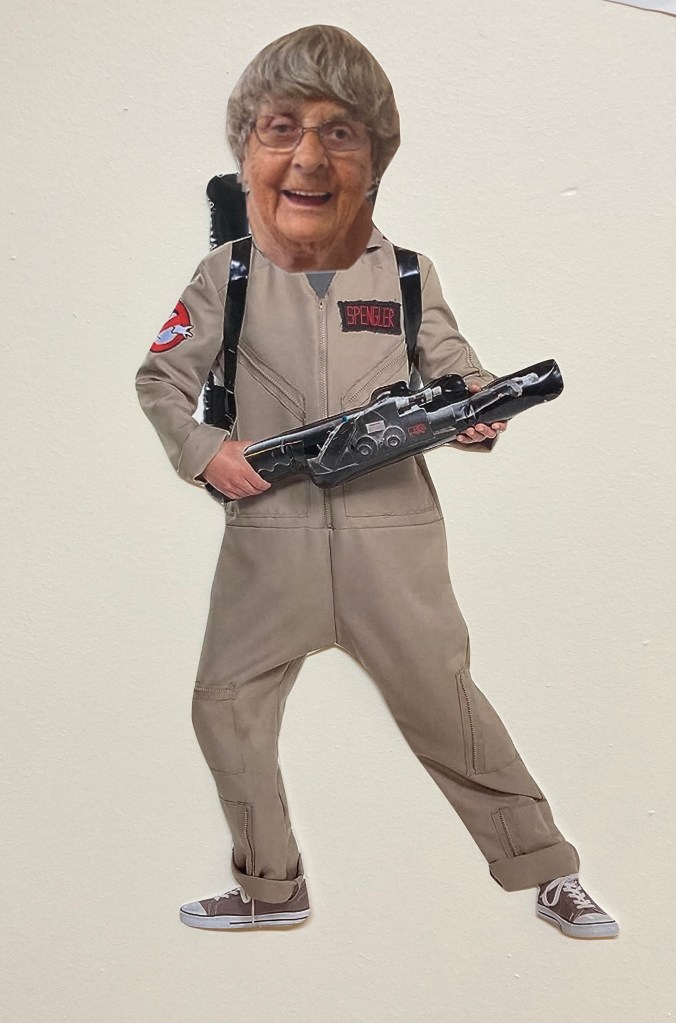
My mum, Camilla–my nickname for her, and the name my kids call her, is Nuddy (a little riff on Nutty I think…I’ve called her this since elementary school). All four of us (siblings) adopted different nicknames for mum: Mills, Cam, and Pong. This pic cracks us all up. Even Nuddy.

Missing Your Missives

I’m learning to work with my subconscious[1] for creative writing. My ability to do this…no, that’s not quite right, I mean my ability to control this—with attention and technique and love—is a recent accomplishment[2]. Gonna use this post to unpack and articulate my two-phase process (and celebrate my progress to a nascent phase two, because man oh man, it’s been a long time coming. Years!).

Phase One: Fish into the subconscious to dredge its messages to consciousness

The most interesting writing** I generate arises four ways. Sometimes these methods overlap with one another. Note a couple of these approaches apply some sort of restriction/constraint to the writing process[3]:

  1. Swiftly written stream of consciousness writing in response to a prompt (i.e., write to the line blah blah… or, write an answer to blah blah question…or, write the scene between character A and B when…). Swiftly written means timed (short, < 15 minutes, though I have stretched drafting to < 30 minutes)
  2. Using another piece of writing, a sentence’s or a poem’s, syntax or rhetorical device or structural form, as a template with which to slot in my own words, images and thoughts.
  3. A line or an image that floats to me when I’m relaxed and engaged in another task (e.g., walking (exercising in general actually), showering, washing dishes, staring out the window, lying in bed[4]).
  4. From dreams[5].

For me, applying a restriction when writing provokes my brain to think sideways. By this I mean punts me off my comfortable (well-trodden) neural pathways and avoid my default “thinking/meaning making” mode. The restriction stimulates “dreaming/imagining” mode (which is the natural state for #3 and #4 in the above list[6]).

**What do I mean by interesting writing? Here are some recent examples:

TypeGenerative methodExample pulled from breezy drafts written in the last month
Image< 12 minute response to a writing promptA woman dragging her carcass of a body on the back of a smile, marionette strings with which her dead weights were held up
ImageDreamA massive black bear sitting on a stony shore, calm grey lake water, catching shiny silver fish. Then it’s holding an infant, and I hear rather than watch the bear’s jaws crunch through the baby’s neck and my thought is, ‘Ah well, I guess that’s done.’
Thought or IdeaFloater while exercisingPeople often use water words and imagery when they talk about the subconscious (e.g., stream, flow, ocean of awareness, diving deeper, swimming below the surface)
Comparison< 15 minute response to a writing promptWe’re taught to read…26 letters in the English alphabet and the millions of words they generate…but we’re never taught to read each other …and though we’re never taught, we do read these betweens (facial expressions, gestures, vocal tone, etc.), read them better than words sometimes.
MetaphorUsing a sentence by Peter Orner as a templateWe started up, as you do lying to yourself: in the net of a valid excuse.[7]
Analogy (ish)Stream of consciousness journaling when too tired before bed (not in the list above, but also, kind of a restriction …or imposed handicap)I am a broken heart. It’s just sometimes I believe you can mend it. It’s the belief that destroys me.
Surprising wordUsing a sentence by Jonathon Keats as a templateTympanic   (I know! I swear this word dropped from the universe onto the page…I wasn’t even sure it was a real word. I looked it up later. It is.)

Now, ideally, I should be able to write this way for longer periods with practice and without the necessary restrictions to provoke the interesting writing. But the truth is, I’m really challenged with this. Many writers can access the subconscious more easily …it’s a state that seems more natural for them.

A thought: the challenge accessing the subconscious might be the reason many artists and writers use alcohol or drugs—the inhibition substances enable—to create art. Substances lower the socio-cultural pressure gates, sanctioning a more permeable membrane between consciousness and subconsciousness. It’s a delicate balance to manage and risk of addiction is…high (no pun intended), so not an ideal pathway.

Substance use also alleviates deep emotional pain, a pain all humans endure to some degree…I’ll come back to this shortly.

So, there’s phase one. And I can confidently claim creating writing drafts that surface magical subconscious gifts. What I’ve been stumped by, until recently, is how to work with the gifted images to integrate them into a completed piece (story or poem).

Here’s my default strategy in a nutshell. The other week I was walking with a writer friend, discussing writing. Not for the first time, she said, “I have to tell you, I noticed it in your writing way back then, and you continue to do it: you overthink your writing,” we were wading a substantial snowbank and it interrupted her train of thought, “You need to….”  here her voice trailed off to silence. Cliffhanger!!! Trying to keep my desperation in check, cough cough, swiping the snow from my legs, I asked, “More emotion? More feeling?”  Yes, she said.

Truth is, I was flummoxed. Wasn’t I doing this already? Actually, no.[8]

Now, I’ve read enough craft essays at this point to understand there’s a chasm wide difference between applying a technical move to integrate emotion and the sublime skill of layering emotion in a piece to create a work of art. This is the same difference I can taste in dishes and desserts that are technically proficient but nevertheless lack a quality I swear to gawd I can sense on my tongue: dishes cooked without love. What does this taste like? Flat.

Here are fragments I’ve cherry picked  and pasted together to serve my own understanding and purpose (is this allowed? probably not) from Jeanette Winterson’s brilliant essay, The Semiotics of Sex, from her collection, Art Objects, Essays on Ecstasy and Effrontery:

“…it is worth remembering that the conventional mind is its own prison…Literature…packs in it supplies of energy and emotion that all of us need…Learning to read is a skill that marshals the entire resources of body and mind…I mean the ability to engage with a text as you would another human being…The love between you offers an alternative paradigm; a complete and fully realised vision in a chaotic unrealized world. Art is the realisation of complex emotion.”  

I won’t go into it here, and I’m loathe to kind of even talk about it, but I must for the sake of Phase Two. Much of the work with my therapist involves me learning to feel emotion in my body. Those deep emotions mentioned earlier that many people resort to drugs or alcohol to suppress or annihilate? Turns out I use high level thinking and analysis as a (socially acceptable) way to bypass feeling anything too deeply. Joy is acceptable and, no doubt, I’m exuberant, especially after a martini. But pain?  Oh, I’ll cognitize the fuck out of it.  Once I understood this, I asked my therapist, failing to mute a whiney earnest wretchedness, am I disabled?

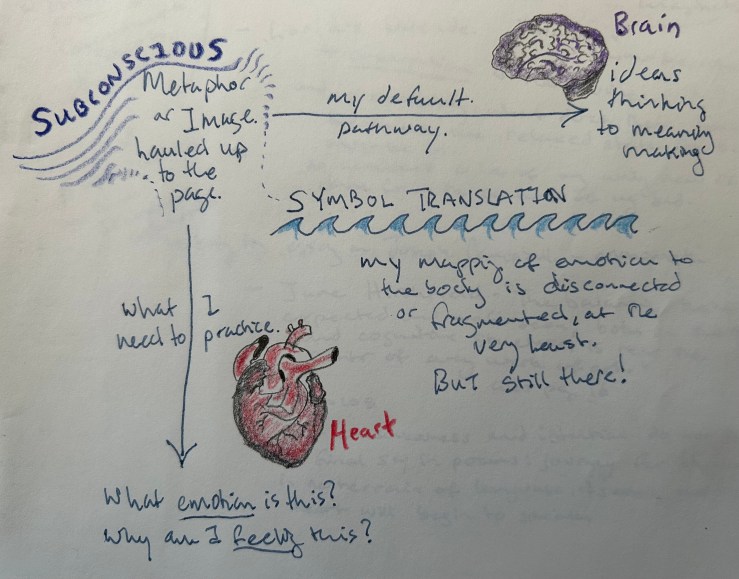
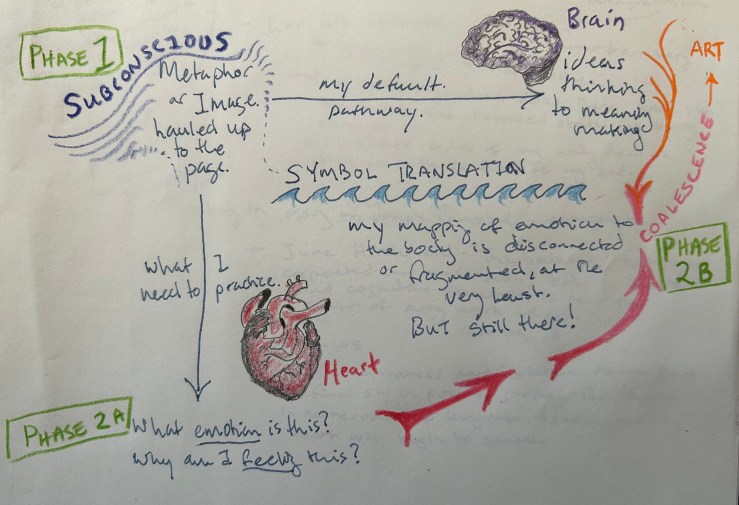
Here’s a drawing of my own creative writing issue process I figured out with my therapist[9]:

Phase Two: Switch from horizontal to vertical symbol translation and FEEL it goddamnit

This is less…concrete…than Phase One because I’m only just beginning to understand and practice writing this way. Here’s how I worked it out.

A few months ago, I posted a creative writing piece in progress, Measures, and used orange text inserts denoting my analysis and thinking about the images and surprising words that came through the breezy drafting bits (but, I note, not the ‘idea’ driven bits).

Originally, the piece was generated as a response to a writing prompt—but not timed—leaving me ample opportunity to twist a narrative around an idea. Which I did. That draft, despite the lack of constraints, held a few scarce subconscious breadcrumbs that I didn’t recognise at the time. I have many many drafts like this (soft whimper).

When I was preparing to read Measures at a public reading, I collaged the original draft together with other fragments of writing I’d done using constraints. I was rushing the edits (a self-imposed constraint). As I collaged, I could sense parts of the text vibrating some energy. I know, weird, but that’s the best way I can explain it.  Those vibrating bits, I recognise now, signal subconscious missives. Maybe other people feel this differently, perhaps it’s simply noticing or a feeling of curiosity. However they’re identified, they’re the bits I have to attend to with care and devotion…a kind of nurturing love.

Phase 2 A

So, what does this look like in practice? It’s leaning into the feelings and emotions arising from the vibrating images and surprising words or metaphors. Instead of staying with surface logic, descend into the body, slow down, notice, INVITE the complex emotions swimming around my insides[10]. Name them – here’s a handy emotion wheel as reference. Map them (i.e., in the body – gut? heart? lungs? heat? cold? tension?).  

For me this requires undisturbed focus best achieved comfortably propped up with pillows in bed. Because this is deeply discomforting work. Feeling sorrow, fear, shame, pain, anything deeply conflictual…it’s only with intentional effort that I sink into these feelings and pinpoint which ones adhere to the piece of creative writing I’m working with. The initial emotion identification process is much less writing and far more, well, active attention to feeling[11].  

Once complex emotions are recognised, named and mapped, the task becomes layering the cascade of emotion into the piece. Because it isn’t just one emotion, it’s the movement from one (or several) emotion to the next. Emotion doesn’t just arise out of nowhere, it’s a relational reaction; it’s the energy of the between (often between people, but can also be between perception, say, a scent, and memory, or between animals and humans, or between landscape and humans…the list goes on…the important bit is that the emotion arises out of relationship).  This is the experience, the relationship energy, I want my reader to feel. I’m creating an experience of complex emotion and I’m communicating, to borrow Winterson’s line, with text as I would another human being. It’s an intimacy.

Phase 2 B

How to do that? Here’s where it gets interesting. As a kid, I used to love those puzzles of what appeared to be hundreds of coloured dots on a page but when concentrated on a certain way and intentionally altering the angle of focus, the two-dimensional field of dots coalesced and popped what appeared as a three-dimensional image. Suddenly a 3D stag was running at me from the page[12]. The optical illusion puzzles are called  Autostereograms (yes, I had to look this up).

The 3D puzzle is analogous to the process I used to layer complex emotional change into my working draft. Here’s an attempt to clarify my process (I’m still working on this….in a few months I might completely change my thinking, but for now, this works):

  1. the effect of the movement of feelings in the piece is like seeing/feeling the 3D image
  2. the subconscious missives in the form of images, metaphors, surprising words etc. are the dots
  3. The intellectual meaning or the question the draft might be revolving around is like the 2D field of dots   
  4. the success of the story is proportional to the elegance with which a writer can layer all these aspects together, the coalescing of components – that movement from 2D to 3D….which, I suspect, is sensed and felt by the reader as opposed to through the mechanism of critical analysis.
  5. How is this done? By blending technical aspects (don’t let them take over!) with subconscious/dream aspects (the signposts of emotional energy)
  6. achieving the elegance of coalescing is the practice

So, this was how I approached the rewrite of Measures, a 905-word creative nonfiction piece. It’s my first intentional emotion blending attempt. When I was puzzling to layer the emotional movements in the piece, a specific line surfaced from the depths as I wrote and fiddled with the syntax (a subconscious gift!) and I burst into tears. A couple of friendly readers, though not all, experienced the same at the same paragraph in the piece. I’ve submitted the story to a few places for publication, waiting for submission windows to open at others…but really, reader reaction means, for me, the writing sings.


[1] I noticed I use the word subconscious as opposed to unconscious. I use subconscious to refer to information just below conscious awareness. But unconscious kind of means that too, though I think of unconscious information as deeper, more inaccessible. Like, my body doesn’t need to think about breathing or my heart beating to keep it upright (most of the time…falling in love or stubbing my bare toe on a concrete parking block changes all that, at least for a short moment). I admit, I took another deep dive into the differences and theories of mind conceptualizing unconscious and subconscious. Short synopsis: originally, the two words were used interchangeably as part of psychological theory. At some point, “unconscious” became synonymous with scientific rigour, while “subconscious” was significantly downgraded (ha ha, no pun intended) to parlance related to woo woo pseudoscientific pursuits, like, you know, tarot cards and ouija boards. So, there’s a classist-type interpretation of the two words. But, in other contexts, subconscious and unconscious refer to different levels of information below our conscious awareness, the former being slightly more accessible than the latter.   Accessibility is thought to be achieved through intentional reflection practices, talk therapies, etc.  [Here’s two whole paragraphs on this subject deleted. You’re welcome.]

[2] Okay, control is probably too strong a word here because the process of working this way, working with a subconscious (and yes, with the switch to using the indefinite article I’m proposing the subconscious is not mine alone, but rather a collective and fluid energy we all swim in…who’s woo woo now? ha ha ha) retains a high degree of mystery and hangs in dreamlike suspension (hang and suspension redundant? no, here dreamlike suspension is a thing, a state of being, maybe even a place).

[3] Though a word count cap is, technically, a restriction, I’ve found this insufficient for accessing the subconscious.  Fewer words in a piece forces grammatical and syntactical discipline. Also, an efficiency of imparting information. But I can still think my way to a finished piece without layering in emotional heat (this is explored in Phase Two). This might also be why fragments written in emails and texts can sometimes fish out unexpected images, words….certainly humour bits I wouldn’t have thought of intentionally except for the challenge to provide a witty reply.  

[4] Best, for me anyway, if not listening to a podcast or distracted by any visual media. Music seems to be okay, though floaty lines are heavily influenced by lyrics so this is a risk…it’s best if I’m not distracted at all. For the last year and a half or so, I’ve eschewed most media, including film, shows, news, in order to nurture and invite….access?…subconscious messaging.  Also, ‘cause I just need the quiet.

[5] I keep a dream journal. I have since 2018 and kicking myself for not starting earlier. BUT – this is hard for me…I rarely remember my dreams …must apply intentional effort to remember them. When I wake, they’re dissolving very very fast. And if I wake in the night, too often I think, oh, I’ll write that down in the morning. Of course, by then, it’s long gone. Despite the dream journal an arm’s length from my pillow, I fail to reach my hand out in the dark. I remember my dreams better when I’m on vacation (I take this to mean that it’s only when I’m relaxed and rested that I’m really able to dialogue with dreams…work-life is too energy taxing. It’s a frustration for sure).

[6] Dreaming may not be “a restriction” per se – but could argue “not being awake” is.

[7] I love this line – it’s got two people in it, a narrator who is lying to themselves and colluding with the reader on this (reader senses the inclusion and also wants to know why), plus the metaphor “net” surfaces connotations of “caught in a trap” of a valid excuse. The reader senses the push-me pull-you tension of an excuse that is likely not valid or at the very least is a trap….but see? Here I have veered off into super analytical mode, ultra meaning making….I run the risk of using my usual approach and creating a “thought up” story as opposed to a “dreamed up” one.  I feel the sentence would be a great first line of a story….ripe for using the timed write method to see what else will surface in a more dream-like way…get more text from the subconscious to the page before meddling with it.

[8] This blog is, I know, ultra thought concept driven. I don’t count the posts I write here as my “creative writing” work. Here, I’m exercising (exorcising?) my analytical tendencies …with the faint hope this will make space in my brain (and body) to allow the dreamwork to happen.

[9] Another friend, when I showed her this drawing explaining my thinking behind it, said, “wait, you drew a model of your analysis of your overthinking?” I erupted gales. A sense of humour is also an acceptable coping strategy for managing deep emotional pain. Subject for another post, this one is too long. Hopefully you’re still with me.

[10] You have no idea how difficult this is. I’m working on it.

[11] Am I also researching epigenetic biological embedding of experiences, relational neurobiology and the ontogenesis of shame, internalised oppression and morality? You betcha. [my gawd, she really is f-ing nutty nut bar]. Don’t worry, I do all of this half-assed.

[12] An AI generated overview of how to “see” the stag –  Parallel (or wall-eyed) method: Focus your eyes as if looking at a point behind the image, not directly at the image itself; Cross-eyed method: Try to cross your eyes slightly to focus on a point beyond the image. Not gonna touch the AI grenade here…except to opine that feelings and emotions are often beyond words and language (why we need dreams and art as translation mechanisms) and I don’t believe AI will learn to fish the subconscious the way humans can hone their ability to.

Sidelines

For a few years, I wrote food columns for community newspapers. Pique Newsmagazine, when we lived in Whistler; the Napanee Guide and Kingston This Week when we moved back to Ontario.  A handful of one-off Canadian publications. Never for the money[i]. Food writing was a lifeline tethering me to taste and flavour and scent and colour and texture, life’s glorious pleasures, at a time when I struggled so deeply with postpartum …was it depression? Certainly severe sleep deprivation, but also the punishing suddenness and baffling inflexibility of a body assuming the mechanistic form of lactation on demand[ii].

In Whistler, Food Columnist came with some perks. A paid pass into restaurants I would never have been able to afford, then, or now. A few foodie special events. And because the food column was really just filler between real estate ads, the editor gave me carte blanche on content and word count[iii].

Once, I got a call on a drizzly weekday afternoon to cover a foie gras tasting. When I arrived, I was stunned to discover the corner of the elegant French-styled dining room was transformed into a buffet (a buffet!!!) of foie gras prepared every way imaginable (pate, parfait, terrine, torchon, melted into risotto, layered atop quince cheese, whipped into mousse and even frozen into ice cream).

At that time, a pound (think the size of a pound—four sticks—of butter) of such richly diseased (forced large) Moulard[iv] duck liver cost a hundred dollars. The table, accented with crystal glasses of honey-coloured Sauternes and goblets of amber Armagnac, groaned beneath the weight of thousands and thousands of dollars’ worth of duck liver. When I think of the word obscene, this is the image that pops in my mind every time. Lifting a glass of Sauternes from the table, I swung my focus to the chef, a classically trained, tall, slim man, transplanted from France, and whispered my fascination-horror. He bowed to me, his expression bursting into a grin of absolute delight, his elegant hands arcing the air above the buffet in the style of Vanna White, and said, “I know! And I didn’t have to pay for any of it!”   I spent the afternoon exercising my French with the farmer couple from Quebec who raised the ducks (and fed their livers) to perfection. Apparently, the ducks will eat whatever you place in front of them, in this case a special diet to imbue the livers with the buttery texture and a golden hue, so it’s not really torturing their livers into a diseased state? And yeah, I sampled as much of the stuff, prepared with textbook precision, I could cram into my mouth.

Another time, another top restaurant, wine pairing dinner. It was the first time I’d left the house solo following baby number two (five months old). I still think I deserve a prize for negotiation skills getting their dad to babysit that evening, but I digress.  There were many other food writers twittering the patio when I arrived.  I knew none of them (such a bumpkin). I did snag a flute of champagne when a silver tray walked by. I was trying to quell the screaming anxiety I felt entering a social situation after months of babied isolation, the fast-descending realisation, like a burning 747, I’d just entered a scene waaaaayyyy out of my league.

While attempting to hold my purse, a clutch (stupid choice, they make purses with straps for a reason), balance my glass of bubbly, ignore the crushing sensation of my toes in heels long neglected, snap my too tight bra into a comfortable position (impossible), a man, quite good looking, gorgeous pale linen oxford button-down, sauntered over and introduced himself. He shook my hand with dry confidence. I always pay attention to handshakes – you can glean a tremendous amount of information about a person from their handshake[v].  He detected my ignorance instantly when he explained he was the editor of Nuvo Magazine. (When one pronounces the word nuvo, one has to draw out the vowels and the finishing ‘w’, layering a hint of upper-class pretention, Neeeeeewwwwww Vooooooowwwww.)

Flustered, I snatched an oyster on the half shell from a silver tray heavied with shaved ice and pearl glistening mollusks. Only then did I perceive I was holding too many things in my hands to parley: champagne, purse, notebook, pen, and now, oyster. Keep in mind, we’re still standing on a patio, glorious soft pink sunset reflecting the mountains’ glaciers. I quickly placed the opalescent shell to my lips and tipped my head back[vi] to deliver the gourmet tid bit to my mouth. Unfortunately, (most unfortunately), the oyster had been shucked improperly and did not release.  The long moment that saw the oyster dangling the air like a blob of snot, my tongue diddling its flesh obscenely, lewdly, before it loosened its shell, was sufficient time for the Nuvo Editor to melt and disappear into the crowd.  

Again, unfortunately, this was not the worst of the evening’s events. Between course five and six (spectacular food btw), I turned to the woman at my left, laughed, and explained how normally, at that exact time, I’d be breastfeeding. This signalled an immediate let down and my milk pooled the front of the exquisite baby blue silk blouse I’d chosen to wear without the foresight to insert protective breast pads.  My editor gave me shit for leaving the dinner early.

 A fond memory. On assignment to interview an organic potato farmer, I drove the flat, fertile, Pemberton valley towards his fields.  Jagged walls of granite, rough new mountains, rose dramatically from the valley floor, their snow-capped peaks spearing a cerulean sky.  Both babies were with me (a detail I felt my editor needn’t know). Willa, a few months old in her bucket seat, and Lillian two and a half, strapped in a car seat. Lillian pointed her pudgy toddler finger out the window and said, “Boootiful mumma.”  

I will never be able to adequately articulate the sensation of gratitude that washed over me at that moment, hearing her words, understanding, witnessing the wonder such a little person recognises and delights in the encompassing beauties of the world. 

And when I sat at the long pine harvest table in the potato farmer’s kitchen, my left arm cradling Willa to breastfeed while my right transcribed notes, Lillian, her little shoulders level with the table top, fisting crayons to paper beside me, the farmer looking rather annoyed I’d brought children with me. I understood then how often the story one is assigned to write is not the story that ought be written. His own young children screamed and giggled, running in and out of the kitchen. His wife hovered in a dark corner and listened attentively to our interview, a toddler hitched to her hips. I was struck by her. She had grey shadows beneath her eyes and her exhaustion stretched her skin shiny at her cheekbones. She looked haunted. And her expression, I knew, matched my own. The farmer’s transition to organic production had come at her urging. It was clear the strain of a circular, balanced agricultural practice and environmental stewardship significantly decreased the economic productivity of their business. One of their children had been diagnosed with autism. The farmer’s wife believed their son’s behaviour far more manageable on a diet free of pesticides. I wanted to interview her, pursue the revealed vein of story, follow it to where it bled, delve deep into the sorrows I detected so clearly, translucent beneath her skin. But I didn’t.  I didn’t follow my heart.

Why these memories today? I’ve been working with a dear friend, helping him to realise his own passion project by exercising my food writing muscles to support the production of his cookbook. Another sideline project I’ve taken on these last months, working as part of a small team (two photographers, a designer, a handful of recipe testers). I’ve discovered my food writing muscles are a little soft …what I had thought would be simple exercise is not. It’s work. I’m struggling to grasp the tone, the angle, my friend, a professional chef and restauranteur six times over, seeks to impart the book. I’m supposed to be ghost writing. I’m supposed to be imbuing the writing with his voice, through his eyes, his sensory experiences. So far, I’m failing. 

Necessary to stop and appreciate the joy of spontaneous street art.

Tuesday last, I interviewed him again and delighted listening to him speak about food preparation, watching his hands fly and finger the air as he gestured the creation of invisible dishes before him at my own dining table. I wondered, aloud, whether it might be easier if I wrote the content as a witness, imparting my own thoughts regarding his process, his approach. We discussed how my voice would, inevitably, infuse and change the work. It remains undecided. I worry. Next month we all travel to Italy together. To cook.  To drink wine. To see great works of art and architecture.  To move in the rosemary and bonfire scented mellow gold air and splendour of Tuscan autumn. I must believe the writing will come to me.

Writing this post, I realise what always tugged the edges of all my food writing:  it’s less about the food; it’s all about the experience.  The experience of sensual pleasures, but also the joy sharing deliciousness with others. It’s about relationships. Relationships between the land and the weather and the hands that nurture, tend, harvest, wash, prepare, and cook the food. Most importantly, it’s about the relationships between people.  This is what matters. This is what is most beautiful.   

A final side observation for today: I am so sad when peach season ends. Their fuzzy, sunset-blushed fade from market stalls signals the season’s shifting light. But I’ll no longer deny any potent persuasion to sink into the sublime sensual pleasures this world has to offer. Here. Now. Follow where my heart leads. Write it down. Embody my dreams.


[i] I was paid 80 bucks for the weekly column in Whistler, and $25 for the Guide, and nothing for the Kingston This Week because both papers used the same publisher, and I signed print syndication.  

[ii] I breastfed each child 18 months. Have to say, I wasn’t ready to wean Willa when I did but succumbed to social pressures and necessity when I returned to part time work. She wasn’t ready either and toddled around with a baby bottle upended at the corner of her lips, looking like a drunken one-handed sailor with everything she did.

[iii] The editor did insist titling my pieces…headlines I would have chosen differently, but not worth a battle. Or apparently a phone call?  I never asked him to change them (eye roll).

[iv] A cross between Muscovy and Pekin ducks.

[v] I taught the skill of hand shaking to my girls very early on. By eight years of age, they were pros. 

[vi] Orgasm style.  I know oysters themselves are supposed to be an aphrodisiac, but on writing this little vignette here, I think instead it must be witnessing the gestures with which they are eaten that becomes the real turn on. A thought anyway….a delightful one.

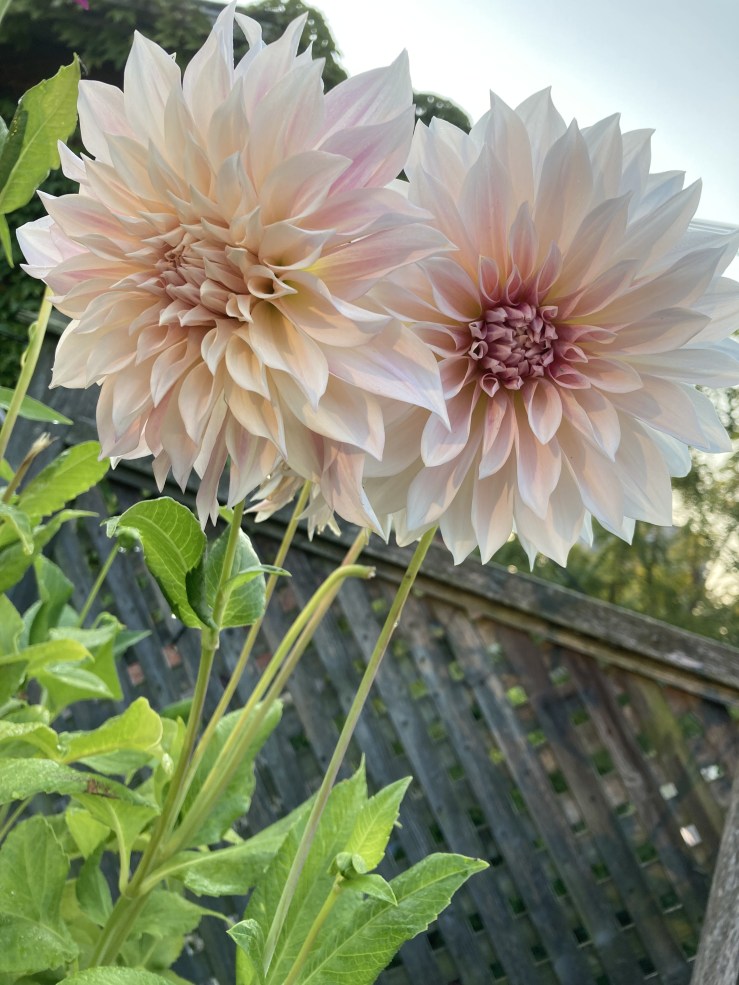
I lifted these dinner plate dahlias from the soil last summer. Boxed them up and stored them in a dark cellar through the winter. In the spring, I planted them on the beautiful terrace garden at my new place and battled the squirrels all summer who continued to believe the tubers would be most delicious each time they dug them up, sampled a tiny bite and spat it out. It’s a small miracle they survived and a massive miracle they live and bloom again. The blossoms are delicate and compact compared with last summer’s riotous overtaking, but retain all their soft, pink petalled beauty. I love them so.

Noughts & Crosses

My mum, a New Zealander, always referred to the game of tic-tac-toe as noughts and crosses. She allowed (encouraged) us kids to draw the 3×3 grids with a blue ball point pen on the soles of her bare feet (size 9, ample space). An aside: the ubiquitous Bic pens of North America are called biros in NZ and the UK (No relation on my Hungarian side, unfortunately. Though my relatives had owned vineyards in Hungary and vacation homes in Trieste, all was lost in WWII. I digress…I’ve been reading Nabokov’s glorious memoir Speak Memory—its White Russian émigrée-ness, a crude comparison to my own father’s flight to freedom following the Hungarian uprising, I know, but I make it anyway, romantic that I am—is rubbing off on me, chalk powder lifted from the pale wing of a lambent moth).  

Our ball point pen plays afforded mum a relatively undisturbed, albeit tickly toed, mug of tea (tankard shaped, insides furred with tannin scales the way she preferred, “don’t wash my cup!”), with a cigarette we eyed as the orange embered ring sucked ever closer toward its filter, horizontal ash cylinder elongating and sagging before she flicked it, a moment before gravity might claim it, into a dusky glass ashtray. Likely she was reading the latest library copy of a true crime book. Not aloud. Though I longed for her to read to us, she rarely did. Once I learned to read—late, I admit to my mortification (my maternal grandmother berated my incompetence, publicly)—I read all sorts of picture books and novels to my younger siblings, delighting how my affected accents, particularly the ‘v’ pronunciation of any ‘w’ (mimicking our Hungarian Nana’s voice) in Roald Dahl’s Witches, transfixed them.  Through the dining room’s picture window, we listened to the lake waves heaving ice sheets to hills along the limestone shore, the scrapes and wind moans as the water worked its way, churning through its six-year replenishment cycle.  (There is an explanatory purpose to this dendritic pathway of recollections, I promise.) Inside, we vied to place our O and X marks in a horizontal, vertical, or diagonal row on the pink spongey under pads of mum’s feet and be crowned ‘the winner’ (an additive aspiration as opposed to elimination rounds: three strikes and you’re out[1]).

It often happens the book I most need to read winds its way to me at exactly the right moment. And so it has been with Speak Memory. I had (again) tied myself in knots and was very cross indeed, attempting to force my long project (book length work) into a structure that just wasn’t working. Maybe I’ve posted the disconnected threads of this creative work here already, too lazy to check, so here it is again: a series of pop culture refences used to hang two different story lines on, weaved (somehow? this part was really screwing with my head), periodically interjected with commentary from a cast of [internal] characters (who seem to keep growing in number). The first storyline, a recollection of past events relayed chronologically, wasn’t working at all – how the hell do I narrow down which scenes to relay? The second storyline, recent events relayed with reverse chronology (and totally taking over the narrative) also wasn’t working because the cinematic renderings felt puerile. Mountains of frustration and angst. Flip flop to working on other things. Flip flop. Flip flop.

Reading grounds me. And I read this elegant passage from Chapter One of Speak Memory that must be transcribed here—lengthy, I know, but any attempted summary would cheapen it. I’ve highlighted the last sentence because it was this line that launched an epiphany regarding my own project and what I’ll try to convey with the remainder of this post:

“But let me see. I had an even earlier association with that war. One afternoon at the beginning of the same year, in our St. Petersburg house, I was led down from the nursery into my father’s study to say how-do-you-do to a friend of the family, General Kuropatkin. His thickset, uniform-encased body creaking slightly, he spread out to amuse me a handful of matches, on the divan where he was sitting, placed ten of them end to end to make a horizontal line, and said, “This is the sea in calm weather.” Then he tipped up each pair so as to turn the straight line into a zigzag—and that was “a stormy sea.” He scrambled the matches and was about to do, I hoped, a better trick when we were interrupted. His aide-de-camp was shown in and said something to him. With a Russian, flustered grunt, Kuropatkin heavily rose from his seat, the loose matches jumping off the divan as his weight left it. That day, he had been ordered to assume supreme command of the Russian Army in the Far East.

                  This incident had a special sequel fifteen years later, when at a certain point of my father’s flight from Bolshevik-held St. Petersburg to southern Russia he was accosted while crossing a bridge, by an old man who looked like a gray-bearded peasant in a sheepskin coat. He asked my father for a light. The next moment each recognized the other. I hope old Kuropatkin, in his rustic disguise, managed to evade Soviet imprisonment, but that is not the point. What pleases me is the evolution of the match theme: those magic ones he had shown me had been trifled with and mislaid, and his armies had also vanished, and everything had fallen through, like my toy trains that, in the winter of 1904-05, in Wiesbaden, I tried to run over frozen puddles in the grounds of the Hotel Oranien. The following of such thematic designs through one’s life should be, I think, the true purpose of autobiography.

Reading the two scenes at two points of time hinged (beautifully balanced) on a matchstick …how do I explain this? It gave me permission (and a concrete example) to think about my own family stories in a completely different way, approaching the writing through connections and associations without a need to be nailed to chronology (more cosmology).

Then I went for a walk with a friend, windmilling my arms ecstatically as I explained (she’s very patient) my intention to (re)enter my writings with this Nabokovian lens to search for thematic emblems or symbols connecting my memories across space and time. She stopped walking, turned toward me with trance-like calm, placed her palms on my shoulders, and with uncanny clairvoyance, suggested the theme I might be chasing[2]. Of course. Yes! Of course. I felt the knowing satisfaction one gets having accomplished a particularly tricky play in a game or solving a riddle or a math equation or when an errant puzzle piece clicks into place[3].

With a deeper understanding of what I’m exploring and using an associative approach I re-wrote the introduction of the long-form project (the 12th time? more?). And it unfolded easily.  The writing slipped into place[4]. Naturally.  Organically. The “story” skips across space and time, mimicking, I imagine, connections between neurons and the way sensory information shunts emotional layers in and out of memory. It’s a natural shape—neuronal axon connections between dendrites in the brain—the same shape as tree branches or root systems, the same shape as alveoli and bronchioles in the lungs, the same shape of tributaries and rivers, the same shape the wind carves rock into canyons.  

And then, writing the introduction by following associations and matching up different thoughts and experiences across time and space (match!), I felt the appearance and associated meaning of the (yet to be written) closing section. And voila, a “frame’, two goal posts materialising from the mind’s mists with a great wide-open field of play ripe for exploration and elucidation between.  

The writing of the intro also handed, like the passing of a baton to the next runner in a relay, an associative anchor to serve for the next section. Then a second anchor followed that…the blossoming orientation reveals itself faster than my writing can keep up. And I’m suddenly cautious, mindful I don’t want to trip into the trap of crushing ideas to shape what I think might be the meaning (I too often do). I want to relax into the magic of associative process…which is almost all feeling…a pleasurable groping in the dark.   Instead of checking boxes in a tic-tac-toe line, it’s necessary to transcend the grid and attend to the curvy swervy intersections as they sift loose the matrix and settle into place.  A long game to be sure, more adventure I’d say.  But a deep pleasure chasing after nebulous meanings and satisfaction when they unite, wet inked, pen in hand.  

I note, writing…the actual act of writing, is the only way to journey there[5].

Here’s a diagram of the structure I’m feeling my way through (it looks more complicated than it is).

It’s like a spiral of discrete associative sections, circling a central axis of a theme. I think of it as less of a spiral though, more like a spring (coiled in tension…it’s the emotional tensions that will pull a reader through…at least, that’s my thought process at the moment).

The thing is, there are so many ways one moves back through the coffers of memory. Teasing experiences from the mind…the events shimmer and change, scuttling light and shadow through the prism (prison?) of one’s mood.  The whole adventure requires slow and curious study to progress the writing with a cool (and open) (and loving) mind.

I would have written it’s serendipitous Nick Cave’s missive today hits a parallel mark, but I suspect there’s less coincidence[6] in these things than we believe: “To write a song requires a reckoning. We roll up our sleeves and through rigorous application encounter the disastrous and mortifying condition of our interior selves. We exert poetic order upon the turmoil and chaos. We hew and hone and bring structure to the stricken heart; we codify our weary souls, giving form to the blues.”[7]

I’ll close by plucking my own curated associations from Nabokov’s closing paragraphs and lines in Speak Memory, found poem-like, manipulating his words into a malleable sculpture to meet my mind’s own bends[8]:

“Laid out on the last limit of the past and on the verge of the present, it remains in my memory merely as a geometrical design…what I really remember about this neutrally blooming design, is its clever thematic connection…it was most satisfying to make out…something in a scrambled picture…that the finder cannot unsee once it has been seen.”

It’s hard to believe in magic. No, that’s not quite right. It’s hard to maintain faith in magic. But it’s there. It requires a practiced (and constantly practicing) eye (and the writing hand(s)) to feel it, coax it forth, recognise it. And though I trip often, injure myself repeatedly in the never-to-be-won plays of this writing game, it’s no fun sulking on the bench. Put me in coach, it’s all fun and games, until I lose an eye. Play on.


[1] An empty threat; I’ll never extend a third feeler.

[2] She’s done this before on at least one other crisis occasion, becoming a human divining rod to deliver the universe’s elegant solution when I’ve missed its crystal clear, often repeating, simple message.

[3] Carolyn, you’re right, I do tend to write the same things three or more times in a row. But I can’t cut them. I just can’t. Sigh.

[4] I can’t help but relay the observation that when I’m writing this way, I completely fall outside time (disastrously sometimes, arriving to work late and later, and, more recently, as I’m transitioning into writing more at nighttime to avoid this, discovering hours have slipped me by. Hours!)

[5] Filtering, almost entirely it seems, through the subconscious.  

[6] I mean, the word coincidence alone hints at the associative pattern with the nuance of a ball-peen hammer striking one’s thumb numb.

[7] Nick Cave Red Hand Files Issue #297

[8] Sorry Nabokov, hope you’re not rolling in your grave.

Diagramming process, here’s a drawing of the dendritic (associative) pathway of this blog post. Importantly, I drew this AFTER I wrote this post, not before. For writing this post, I came up with the title first (this is often the case….a single line to begin the writing) and wrote from there, the images and memories and my recent readings all being pulled into place around the vague theme of “games”. This was, no doubt, spurred on by another quote of Nabokov’s I’ve been wrestling with (having trouble with his word deception) about his observation related to the way insects use mimicry to avoid detection and how this relates to art: “I discovered in nature the nonutilitarian delights that I sought in art. Both were a form of magic, both were a game of intricate enchantment and deception.”

Floetry [1]

Rising to the challenge of learning new tricks, I’ve taught myself to split logs with an axe. [Insert vinyl record scratch – wait…what? Connecting chopping wood with creative writing? Can it be done? Can she do it? Yes. Yes, she can.]

We’ll bounce back to the axe. First, let’s chew over energy. I’m referring to the energy[2] transferred between writer and reader via words.

But that’s not exactly what I mean, not quite right.

Pause. Think.

I mean the deeper sense (yes, that’s it) moving beneath (between?) the words, infusing the communication with vibrating vitality that travels, magically, across time and space to touch a reader right in the feels[3]. This is the goal. It’s fucking elusive.

Poetry is good at it, yes. We know it when we read it, receiving the energy as a hit to the heart, a pinch in the gut, the diaphragm kicking up an exhale, tearspill from the eyeballs, etc. Songs, and music too, deliver emotions beyond words. But to create that infusion of energy as a writer?  Well, that’s a whole different thing.

Gonna try and unpack the what/how here. Actually, I only get as far as trying to describe what this is like…I suspect the figuring out how to do it is a lifelong quest.

I’ve managed this feat of transference a handful of times. Always by accident [read: I have no idea what I’m doing…I just know when I’ve done it…some of the time]. The first time was in grade six when the teacher, Mr Pritchard[4], asked me to read my creative writing assignment aloud to the class. As I read—a passage filled to the brim with beauty and love and flowers and shell necklaces and turquoise seas and gorgeous Tahitian women with naked breasts—I felt a hush descend in the classroom. I felt every ear tuned to my voice, felt the beauty travel from within my body outwards to all the other kids who had stopped squirming at their desks and listened, captivated. It was a magical moment. But, tinged with shame I’m afraid because I’d plagiarised (ish) – I lifted the scene straight from the 1984 film, Mutiny on the Bounty, with Mel Gibson (who, yes, I swooned for in grade 6) and Anthony Hopkins (who terrified me). I’d transcribed the scene depicting the tall ship making landfall, the radiant “Natives” canoing the surf to greet the voyage weary sailors, shower them with strings of orchids, promises of paradise. Despite “stealing” the imagery, I felt the energy my writing created and its impact, and with these, the promise of its power…

Other times I’ve managed this feat: after reading my work at a poetry reading strangers approached me and I sensed they wanted to touch me, though they didn’t dare (so strange); in a message of condolence to a friend following his father’s death (a friend I have great admiration for and, at one time, was deeply attracted to…does this matter? It may); impressed in various email exchanges; sometimes in texts…actually, texts often have a lot of energy coiled within them, a kerpow sort of split and splintering humour I adore.

Some observations for when the energy transfer actually works (because yes, this is for posterity, so, be honest[5]): I have to be in the act of free writing, meaning, I can’t be directing the writing with my thinking (brain must be put on pause); I have to be relaxed; I have to be thinking about the person I’m writing to, or about, (or specific people)…not an abstract concept of “audience”; I have to be calm and unrushed but also focused; I have to “turn off” any questioning, i.e., second-guessing (the inner critic must be silenced).  The feeling, when this is all flowing—because all these conditions must be met at once, simultaneously—is that the energy moves through the body onto the page. Where does it originate?  This is a great mystery – from within? From without? Both? When it’s all flowing and the energy infuses the words…it feels… effortless.

And immensely satisfying.

Back to chopping wood. Though I have lived in at least two houses heated by woodstove, I’ve never been the person wielding the axe (or the splitter; I’m always the stacker and I’m afraid of chain saws or any loud power tools).  The woodstove at this house is not for heating, it’s more of a vanity woodstove, ha ha, but damnit I wanted a fire. The logs, beautifully stacked just outside in the breezeway, were too big to wedge in the stove. Plus, I needed kindling.  An axe lay at the ready, propped against the pile. When I first grasped the handle[6], I envisioned its blade wedged in the flesh of my foot, arterial blood spurting all over the place (I’ve cut the dickens out of my finger[7]).  Not a good way to start. I raised the blade and tried to keep my eyes from shutting when I brought it down on a propped-up log. My body was tense and that tension transferred to the wood. The bit (of the blade) bounced wildly off the log’s end. Somehow, after repeated attempts and ricochets, I bruised the shit out of my fingers (not sure how that happened but it did).  My initial swings were tentative (weak, timid). Slowly, I managed to figure out how to get the bit to bite the wood. But then I got the blade stuck and spent way too long, swearing a blue streak, extricating it.  I got increasingly frustrated and yes, I wanted to cry. Maybe I did cry.  But I wanted a fire! Frustrated and spent and not giving a shit anymore, I mustered a strength that began in the soles of my feet, travelled like a wave up my legs, through my torso, along my arms, the length of the axe’s handle. I raised that goddamned axe high above my head, creating a lever of beauty embracing momentum, gravity, tracing an arc, letting it fall to bite its mark on the log’s end, splitting it instantly, the two pieces of wood flying apart with an edifying crack.  Physics! (I shouted out loud). Once I got the movement and the attitude down, I’ve been able to split logs with ease.  Key: the energy must travel, as a wave, through the body, through the axe, to the wood. When the movement flows this way, the log splits without effort. Brute strength is unnecessary, even counterproductive; energy moves with elegance. Exactly the same way it can flow through writing.

Now all I have to do is figure out “the movement” that invites the energy to move through…

Speaking of quantum physics (we are, aren’t we?), in a recent workshop I was challenged to write a flash narrative integrating quantum physics. In workshop, my piece was one of fifteen to “win” feedback from a SmokeLong senior editor (who knows, maybe only eight of us entered). To be clear, this piece DID NOT (at all) succeed in the energy transfer thingy I’ve been writing about here, but it was fun and quick to write and, following some, ahem, contest overseer requests to change the original piece and make it more appropriate for a general reading audience[8], I submitted it, for fun, to the Quantum Shorts competition. It’s up, for a short time (till March?) on their website for reading.

Let’s end on a far more eloquent description of the energy travelling through words (gawd Suzanne, an axe?! How crude.) with the last section of a poem titled, The Other Tiger, written by Jorge Luis Borges:

We shall seek a third tiger. This
Will be like those others a shape
Of my dreaming, a system of words
A man makes and not the vertebrate tiger
That, beyond the mythologies
Is treading the earth. I know well enough
That something lays on me this quest
Undefined, senseless and ancient, and I go on
Seeking through the afternoon time
The other tiger, that which is not in verse.

[From Dreamtigers, by Jorge Luis Borges, translated by Harold Morland]


[1] Such a great song by Floetic.

[2] Do I mean emotion? The energy of emotion?   I’m still thinking about this, whether they are one and the same or whether they are similar yet texturally different…still, something that moves, that has momentum, sharing that etymological root (Latin movere “move, set in motion; Sanskrit kama-muta “moved by love”). Certainly relational, not necessarily a bidirectional relation, pluridimensional.  

[3] This is not a new idea. Not even close. Here’s Rumi’s continuing commemoration through mille-fold Instagram and FB unicorned affirmation posts, “Words are a pretext. It is the inner bond that draws one person to another, not words.”

[4] An aside: Mr. Pritchard—my mother, with kiwi candor, called him Mr. Prick Hard (Mum! You can’t say that!  Don’t worry zanny, he can’t understand my accent! But mum, you’re speaking English!)—was an evangelical Christian. I delighted asking him to explain what I postured to be a genetic impossibility, all of us descendants of Adam and Eve, I mean come on, we’d all have, like, six eyes and no legs. Or maybe six legs and no eyes, more like. I think this must have been after my reading aloud to the class, I’m sure I was never called on again…anyway, I was disappointed he didn’t oblige an argument, simply told me to take my seat.  

[5] Line from the movie The Princess Bride, a torture scene, but whatevs.  

[6] New learning: an axe has all sorts of parts to it, many named, incidentally, after parts of the body: belly, throat, shoulder, butt, cheek, beard etc. See here, but then, check out the website landing page – hilarious, depicting a stunning combination of free flowing alcohol, people weaving around wearing animal masks while winging axes at targets chalked on a plank wall.  What could go wrong?  Oh, there’s pizza too.  All good.

[7] This one’s for you Ny, a classic Saturday Night Live skit with Dan Aykroyd impersonating Julia Child – the quote comes in at the 1:50 mark but the whole skit is a great laugh. Anyway, this is how I envisioned my newbie axe wielding would go.

[8] I was asked to remove the swearing. So, I changed ‘fucking’ to ‘flaming’, removed ‘fucking’ from the footnotes, (it appears I am addicted to using footnotes – is it irritating? Let me know) and changed ‘fucker’ to ‘boneshaker’ which I like even better because of its loose allusion to oral sex. Which, incidentally, the contest people didn’t ask me to clean up for a general audience and I delight that it hangs out there to tease some unsuspecting general audience member. Ha ha.

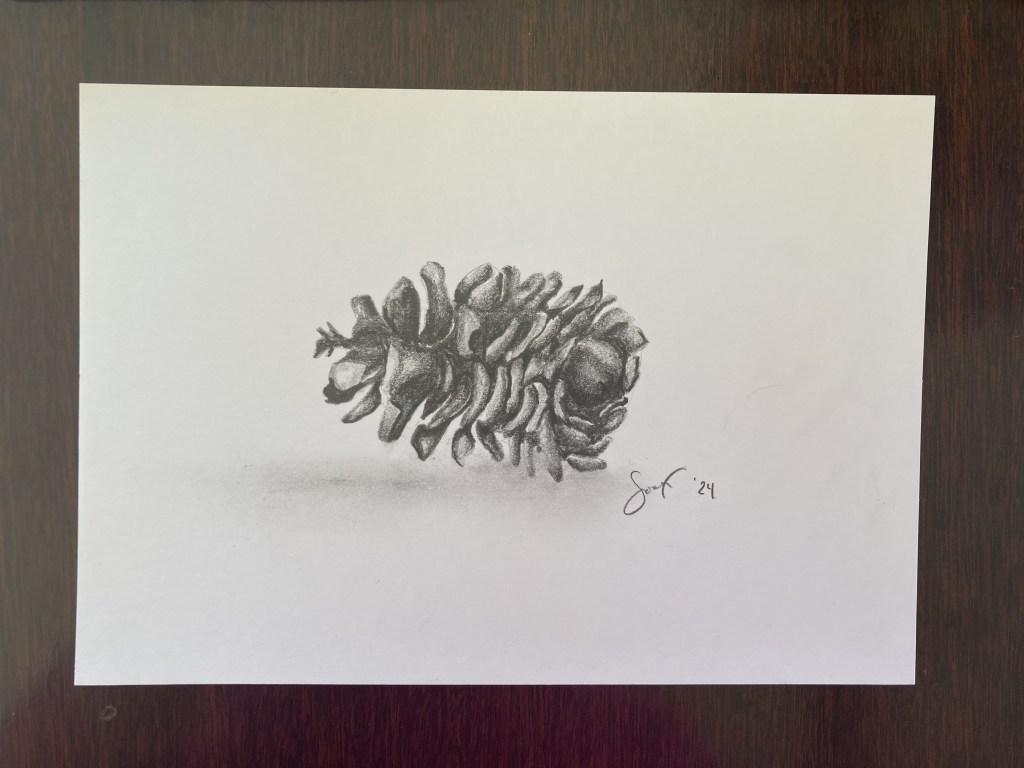
[9] I’m trying to slow down. It’s been …an emotional few months. To help calm myself, I’m practicing drawing these small beauties, found thingies picked up on walks. Feels good. I listen to music, gorgeous song, when I draw. I have always signed artwork with Soux, a spelling I claimed as a young teen, exercising some initial sense of autonomy I lost along the way (though, high school friends still address me using this spelling).

Shifting World Views & Learning Different Ways of Knowing

In the past, a shift in how I viewed the world happened quite literally. I travelled to New Zealand over twenty-five years ago and discovered a large world map with New Zealand at its centre. Up until that point, my education and experiences about what the earth looked like and where the continents were located in relation to one another was depicted with two views (remember, this is before Google maps). The first was on a globe whose axis tilted away from my body and fastened to a stand. The attached points of axis bisected the north and southern poles, focusing spinning attention to the northern hemisphere (Europe, Russia (USSR), North America, half the world’s oceans). If I had to find New Zealand, the country where my mother was born, I needed to bend upside down to see it.

The other world view was a flat, two-dimensional map, the sort that gets tacked up on bedroom walls or ceremonially unrolled to obscure the chalkboard at the front of classrooms.  On these maps the Americas (North and South) are rendered on the left-hand side and Europe, Africa, Russia, Asia, Australia (and New Zealand) on the right-hand side.  The Pacific Ocean is split (so one doesn’t quite appreciate how vast it is) and the Atlantic Ocean takes over the middle ground.

On the map I discovered in New Zealand so many years ago, the two tiny islands commanded the middle space and suddenly I appreciated how far away the country really is from most of the other continents, floating there in a large blue pool (the Pacific Ocean). In the NZ maps I was stunned to discover how close Russia and Alaska are to each other (the western tip of Cape Prince of Wales in Alaska is 88.5 kilometers (55 miles) from the Southern point of Cape Dezhnev in Russia – if I were driving this distance across the Bering Strait, it would take me less than an hour!). And with this realization my mind moved through a reshuffling of Cold War history and Canada’s shared responsibility with the US for continental air defense through NORAD (North American Air Defense Command).

Of course, with Google maps available at our fingertips these days, my naive view of geography and related epiphany is outdated. My point is that I had accepted these two views of the world “presented” to me without questioning the perspective (and possible motives) of their presentations. I’ll get back to this thought shortly.

Another map and another example. This time focusing on the north-east region of North America (Ontario, Quebec, the Atlantic provinces, the states along the eastern seaboard, the southern shores of the great lakes, lining the Mississippi River and other confluences and tributaries – the water here is important). This map, a map free of border lines (province, state, or country), depicted the diversity of Indigenous languages with coloured circles of concentration. Sometimes the colours overlapped, indicating mixed languages in regions, but on that map (a simplified version from the picture below), it was instantly clear how Indigenous languages mirrored waterways (water being an essential human resource). Again, I experienced a mind-bending reshuffling to appreciate how cultures depend and thrive in relation to land and water. But also, how superficial country (province and state) borders are. Crayon lines drawn by Kings and Queens, heads of state. Crayon lines our loved ones fight for and die on. Crayon lines that shift and move, depending on which resource they’re circling, gold, uranium, olive groves, copper, waterfalls, coal, legislation, policy, justice, freedom, the list goes on.

From Native Land Digital https://native-land.ca/

What does this have to do with creative writing practice?  Well, a lot actually.  It’s a bit of a conceptual leap, yes, but bear with me.  The way we carve categories in the world around us, be they continents, countries, or the way we name the world with words, impacts the way we “see” the world, how our perceptions are influenced.  Words matter – they determine how we think.

These quotes from a recently published piece by Christine Kenneally in the

Scientific American November 2023 Issue:

“Culture shapes language because what matters to a culture often becomes embedded in its language, sometimes as words and sometimes codified in its grammar. Yet it is also true that in varying ways a language may shape the attention and thoughts of its speakers. Language and culture form a feedback loop, or rather they form many, many feedback loops.”

“…the more we ask empirical questions about language and its many loops in all the world’s languages, the more we will know about the diverse ways there are to think like a human.”

I need to reread David Abram’s astounding book The Spell of the Sensuous which explores similar ideas, comparing Western language development to Indigenous ones.  A review of the book written by Émile H. Wayne offers this distillation:

“When our ways of thinking and knowing are rooted in the actual soil of our actual communities…we are called out into the world where we meet, in every bodily sense, the consequences of our own actions. Non-human nature becomes present, aware, vocal, integral to our being. We find ourselves living not in the midst of our abstractions – nation-states, linguistic group, political party – but as members of a living, breathing, often suffering, body of relations.”

For these reasons (and others – this post is too long already), I have started to learn Anishinaabemowin with the Kingston Indigenous Language Nest. I would like to better understand how Indigenous Peoples of the land on which I learn and live name and view the world. I want to expand my worldview.

I would be remiss if I failed to name an additional world view shift I am making. This month, I made the very difficult but courageous decision to leave my marriage. Quite simply, I want to be independent. This is the language I have been using. I do not feel I am leaving my husband…we are bound to one another through our children and the life we have created together, both in the past and the one we create in the future. Our relationship shifts – it is my hope we remain friends who love each other. It is a painful separation. I am blessed to be surrounded by people who love and hold me, keep me floating. Writing my way through is helping. Also art. And songs. And lifting the Dahlias from the soil to overwinter. I’m not sure what garden they will be planted in next year, but they are waiting in the dark. Kind of like me.

I have been learning names of animals in the Anishinaabemowin classes I began. We learn as children do, with songs and games. It’s fun. The other night, I discovered a gray tree frog in my kitchen. It’s the first time in close to twenty years of living in this house that I have found a frog within. Agoozimakakii is the Ojibway (a dialect of Anishinaabemowin) word for tree frog. Phonetically it is pronounced: ah-goh-say-mah-kah-ki. Today I am leaving this house, this home…when I looked up the spiritual meaning of finding a tree frog in one’s house, I discover it’s “a symbol of transformation…In some Native American traditions, the frog is seen as a guide who can help individuals transition between different stages of life.”

I had a hard time catching the poor wee thing, the heart shaped tree frog slightly smaller than the palm of my hand. She was fast and strong, and she hopped from my hands several times, landing with splats on the linoleum.  Finally, I cupped her in my palms and placed her back outside under our exquisite moon, its light making our skins glow.

I have opened the borders of my soul with these moves, these shifts, expanding my view of the world with new perspectives. I aim for Mino Bimaadiziwin, an Anishinaabemowin phrase meaning “to live the good life” in a wholistic sense – “the intelligence of the mind is inspired and informed from the intelligence of the heart.” It is terrifying, but also, feels exactly right.

Be brave – Aakode’ewin. In the Anishinaabe language, this word literally means “state of having a fearless heart.” So, this is how I step into this new-to-me kaleidoscopic landscape and learn to name the world.

Filling the Well

My passport was declined the maximum three times at the new scanning kiosks at Canada customs. I left the wave of Canadians passing with ease through the machines to find a customs officer in the flesh, “Where are you coming from?” Looking me up and down, a middle-aged woman travelling alone, he was confused. “Mexico City” I handed him my passport. “And you didn’t travel in Mexico?” “Yes, I did, but not by plane. By bus. And taxis.” “It’s unusual for a Canadian (he paused here but did not say ‘woman’) to travel like that, from Mexico City.”  Given the circumstances (trying to re-enter my country with as little friction as possible), I opted for the simplest, also the most honest, response, I said, “I’m glad to be back.” “I bet” he said.  

I hadn’t travelled alone; I met my sister in Mexico City. She had flown from the Yukon. We travelled the two weeks together, visiting her favourite places—Mexico City, Tepoztlan, Acapulco. She’d lived and worked a whole decade in Mexico and returned to Canada five years ago. Her Spanish returned fluid, fluent, the moment she landed.  She had asked me to visit so many times when she lived there, but my kids were small, I didn’t have the money, couldn’t secure the time away from work…so many excuses. Even when her partner died suddenly, in a dangerous town just north of the Belizean border where baggies of cocaine wash up on the beach and the people carry machetes and several sport missing limbs, I couldn’t go down there, to help her through that horror. My husband outright forbade it. With good reason, really. This trip was long overdue. And we didn’t have any epic blowouts or even anything more than mild disagreements. Maturity counts for some things.  Acquiescing my movements to the pace of a cigarette smoker helped: walk a little ways, smoke break, walk a little further, smoke break.

Dropping into another culture, another climate (several climates really, because with every move we made the temperature, the way the air moved and touched my skin, the scents on the wind, changed), surrounded by a language I didn’t understand, kickstarted my mind. Thoughts, sensory experiences, sparked and fizzed. Released from the demands of work, of family, of regular life, I settled into being, allowing my tongue to bend around the new language, a different grammar, novel tastes.

I didn’t write much. Jotted a few fragments, impressions. I collected flowers—Jacarandas from the purple blossoming trees, bougainvillea, frangipani, others I didn’t recognise—pressed them between the pages of my notebook. I carried my pencil crayons but never drew anything. I didn’t quite feel settled enough. We were on the move. There was too much to look at, take in, make meaning of. Everything was fantastically loud: competing car radios, shop front music blasts, horns, bells, the screeching of brakes, the barking of dogs, the crows of roosters, birdsong, people yelling, begging, singing, whistling, babies crying, children laughing, and Mexican style fireworks which really sound just like cannon blasts. They made me jump. Every. Time. One expat suggested the fireworks—long baton-like sticks held in front of a person as if carrying a flag, gun powder stuffed in the top end and lit—as Mexicans reclaiming the fear they’d felt when colonial conquerors landed with their real cannons in centuries passed.  Maybe.   

It felt good to get my brain buzzed. To slow down. To simply feel.

I read four books, two by Mexican author Elena Poniatowska (an émigré from France). Her writing is gorgeous and, I imagine, even better in their original Spanish (the short story collections I read were translated by George Henson and Elizabeth Coonrod Martínez). Here is a good and very recent overview of her life as a writer, from The Washington Post, written by Kevin Sieff.

Amidst the concrete, the gates, the walls frothing barbed wire, shards of glass, the flowered vines spilled forth, the flowers rioted, the birds swooped and sang. In a place where even the laundry hung to dry on the rooftops is caged, there is art on the walls and parades of people celebrating. I spent my time ingesting it all. Feeling full.  

With Gratitude

Hmmm…so many things wrong with this rendering. But I guess, also, so many things right.

On this day of (Canadian) thanksgiving, I want to acknowledge and extend my gratitude to all of you, the readers of my creative work.  Especially here, on this blog, this teensy tiny corner of the digital universe, a place where I slowly work out my thoughts about creative process. You are patient and kind and giving of your time and attention.  You make my writing a conversation. You are the connection I crave. Thank you. 

I have been writing down glimmer dumps, a practice of attention and sensory writing advocated by writer, Pam Houston, and described in detail by Maxima Kahn here.    

I leave two with you here, from the last week, small offerings of gratitude.  

One: 

Driving the rural roads round my place, the trees remain in full leaf but glowing yellow and red in the warm light of mid-afternoon.  With all the rain we’ve had, the lawns and livestock fields shine bright green. Cows in a clumped white herd (Belgian Blues? Charolais? Murray Greys? I wish I knew) on an emerald hillside, but one cow, off in the field on its own, jumped up, rocking in the air, its tail curved up in a smile. It leapt like a young puppy dancing, and I delighted I’d caught a cow mid-joy. 

Two:

As I write, the rain tinkles in the eavestroughs and a whole lot (a flock?) of starlings are singing from their perch atop the pine trees in the backyard…sometimes the song drops suddenly into silence and the whole lot of them lift off, rising through the air, each one morphing into a whole, a murmuration, and I am reminded again how magical the moments in this world can be. 

Celebrating you and your reading!  Cin-cin!

Writing a Narrative Helix

I listen to a lot of different podcasts about writing.  I’m particularly drawn to detailed craft discussions, conversations about process, and talks about how ideas make it to the page.  Often, by way of a podcast, I’m introduced to a writer I haven’t read yet. This is how I came to the work of Lidia Yuknavitch, author of The Chronology of Water and Verge, among others. You can listen to her fantastic interviews with David Naimon on Between the Covers or with Brendan O’Meara on the Creative Nonfiction Podcast. She also has presented a TED Talk The Beauty of Being a Misfit

Lidia has created a space for writing workshops called Corporeal Writing and generously offers a free intensive 90-minute online session on the Narrative Helix form.  This is an example of a number of Write Now intensives offered online through the website.  I watched the narrative helix video and came to understand the form (two completely different strands of writing, one a themed list of the writer’s choosing, and a second narrative story delivered in short chunks of prose, then interspersed by selections from the [unrelated/maybe related] list…it sounds more complicated than it is…the video of course is much better.  Watch it.). I was intrigued to learn the value of using a different, structured way to enter and write difficult emotional material. 

So, I tried it. And it’s working.  I’ve completed a draft and it’s 7400 words.  I’m aiming to edit it down to 3000 if I can.  But I wanted to write here about the process and experience of working through the exercise.  The list was easy to come up with and populate: 1980s movies.  For the story aspect, I used a photograph from around that time as my jumping off point and a stream of consciousness approach to write everything and anything that popped into my head about each person in the picture.  This was interesting. My thoughts tumbled freely and the memories surfaced easily. The approach also suited my restricted writing schedule…these days only an hour each morning.  But, an hour of solid writing can generate a lot of material, especially if I’m not editing the writing as I work.  

In the video, Lidia discusses how the two narrative strands twist round each other to create a resonance between them (and become a helix).  I didn’t quite believe this would happen…but it did.  When I started writing I wasn’t sure where the project was taking me, I just followed the steps.  Now, after the first draft, I see the repeated imagery (knives) and can question its appearance (I won’t spoil the reason, but it has now become the focus of the essay, the thesis statement, if that makes sense). I’m looking forward to going back and crafting the piece, collaging it together, to carry a reader through my story.  Somehow, the exercise has helped me to understand how the pieces and process work together. I’ve challenged myself further and have signed up for one of the Corporeal Writing online courses…more to come.