Present Time & Process Time

Adapting to this new way of living.  We all are.  Home now, I’m learning to inhabit altered intersections of time and space.  Following various veins of social and news media, the cry of despair and boredom can’t be ignored.  But it isn’t my own experience.  

I suspect it isn’t for many people, continuing to work so very hard to keep supporting the planting of food crops, vital food chains, addictions services, police services, online education,  delivery services of all kinds, old and emerging, policy work at every level of government,  shifting arts and entertainment strategies, and of course, health services of every sort, from long term care homes to paramedicine to emergency departments and intensive care units to public health units.  The list is long. I’ve missed too many I’m sure.  

And people continue to do this work from their homes, as they can, attending virtual meetings and using VPNs, with their children and partners and extended family members to care for, in the same, increasingly restricted spaces. And some people are working from a home where they are completely alone. And some people don’t have a home to go to.  

The cry of despair and boredom wailing from the internet is hard to ignore, hard to sympathize with, and also, hard to believe.  But the internet is never a good representation of universal truth is it?  Except to say that humans love cats and pornography the world over.   

More problematic is the internet’s shriek of boredom paired with another pressure: to be creative.  The message has been clear: use these yawning weeks of time to finally work on the projects we’ve always wanted to.  But if spare time is a myth for so many, then creatives need recognise the promise of creative productivity, in the time of coronavirus, as what it is: a wispy curl of mist on a receding horizon. 

Instead of choking ourselves on the smoking embers of our creative fires, so suddenly doused by the pandemic, we need to forgive ourselves.  We need, instead, to be present and engaged.  Creatives need to witness.  Creatives need to experience.  

Before now, communities lived through disruptions not unlike this one: other disease outbreaks; weather related calamites; earthquakes; tidal waves; wars.  People suffering those situations were similarly stunned by their forced submissions. More so, by the tragedy of lives lost. Right now, we are in crisis. And crisis demands attention, vigilance and focus. 

In time, and with distance from the here and now, as with the slow turning of the seasons or the harvesting of meaning from memory, art will bloom again. 

Forgive ourselves for not forcing what cannot happen right now. The spark of creativity glows in all of us.  It will fire again, in a time which is different for each and every one us. Process—the way we make meaning of our experiences by creating something new, something that moves through us as synthesis—is as unique as our fingerprints.      

Word follow: Creativity

‘I suffer as always from the fear of putting down the first line. It is amazing the terrors, the magics, the prayers, the straightening shyness that assails one’

John Steinbeck, Journal of a Novel: The East of Eden Letters

I’ve returned from a week and a half vacation in B.C.  Of course, I brought my notebooks, my computer, and some select drawing materials, believing I would have the much needed down time in order to create or work on expanding the draft of a short story I’m working on.  That didn’t happen.  The time change—even moving as little as three hours towards the sunsets—made me feel nauseous and exhausted.  Wonderful visits with family and friends filled the days.  The artistic practice routine I’ve guarded and carved at home, dissolved. I let it. Instead, I welcomed the laughter, delicious food and wine, the spectacular mountain views. It’s all essential.    

Two weeks not practicing makes it hard to face a blank page. Like any exercise, I need to build back my muscles.  Habits help.  I’d be dishonest if I didn’t admit the tailspin of self-doubt and anxiety (again?! still?!)  about my artistic abilities or my lack of productivity. It’s a comfort knowing most artists feel this way. Most creatives? And then, I wondered, why?  

I attended a lecture at Queen’s University this week, a PhD student in the education department exploring how the concept of “creativity” is incorporated and has influenced the Ontario curriculum since the 1880s to now (no small feat) (1).  His research demonstrated the word “creative” doesn’t enter common usage until the 1950s or so, an etymological fact that surprised me. The original use of the word, according to the Oxford English Dictionary, and a theological reference the student managed to track down, deviates from the modern definition we bandy about and follows an interesting progression through the next few hundred years. 

In the 1640s, creativity was associated with “creationism” and the divine (read: God) ability to make all things, all of “creation”.   This older concept of creativity became associated with the idea of a “God – given gift” and that association then became linked with “genius” and “ingenuity”.  Read: reserved only for the special, “chosen”, few (and, historically, almost exclusively white males in Europe). Genius was reserved for those bestowed (by God) with the creative power and understood to be an innate gift, not something one might learn (through practice, for example). The tiny tinsel ring of recognition bells might be ringing in your mind….

From there, the concept of creativity grew and changed.  But slowly.  It wasn’t until the later 1800s that it slipped under a conceptual definition that was more inclusive, through the founding father of kindergarten, Fridrich Froebel, a German educator.  He believed all humans are creative (not just geniuses) and ought to be left and encouraged, through play and exploration, to cultivate individual creativity.  This seems closer to what we aspire to (and believe?) these days, but artists are still assaulted by imposter syndrome and fear…what happened?   

Froebel’s ideas managed to influence curriculum development and implementation as far from Germany as Ontario, but in the early 1900s, it was believed too free and difficult to control alongside more traditional approaches to education.  Two world wars with Germany on the opposite side did the conceptual definition no favours.  It fell to the wayside. I wonder if it is any coincidence the surrealism, expressionism, cubist and art deco movements grew out of this time, following on the heels of impressionism?  Did those artists as children attend kindergartens where they were free to explore their creativity?  

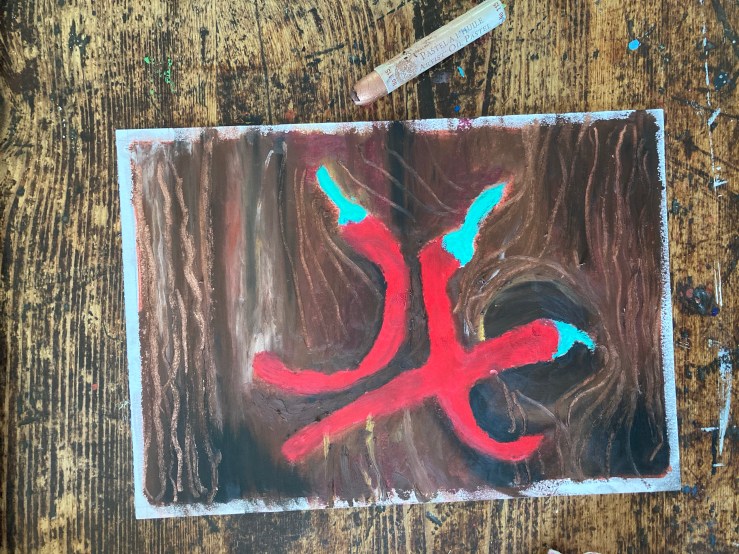
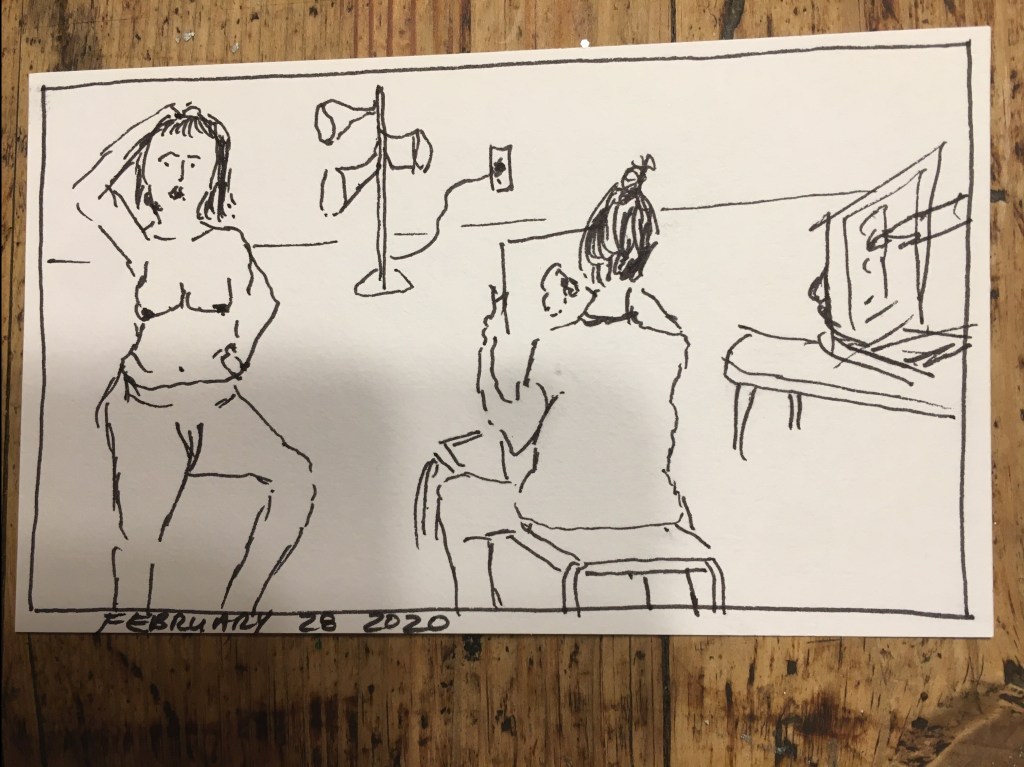
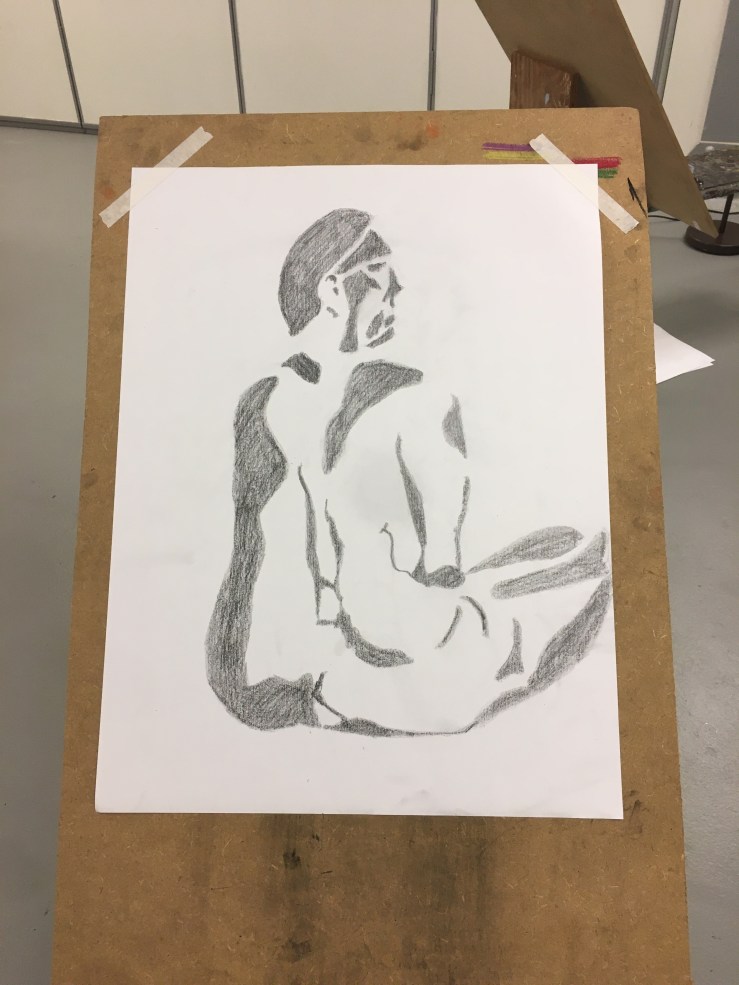
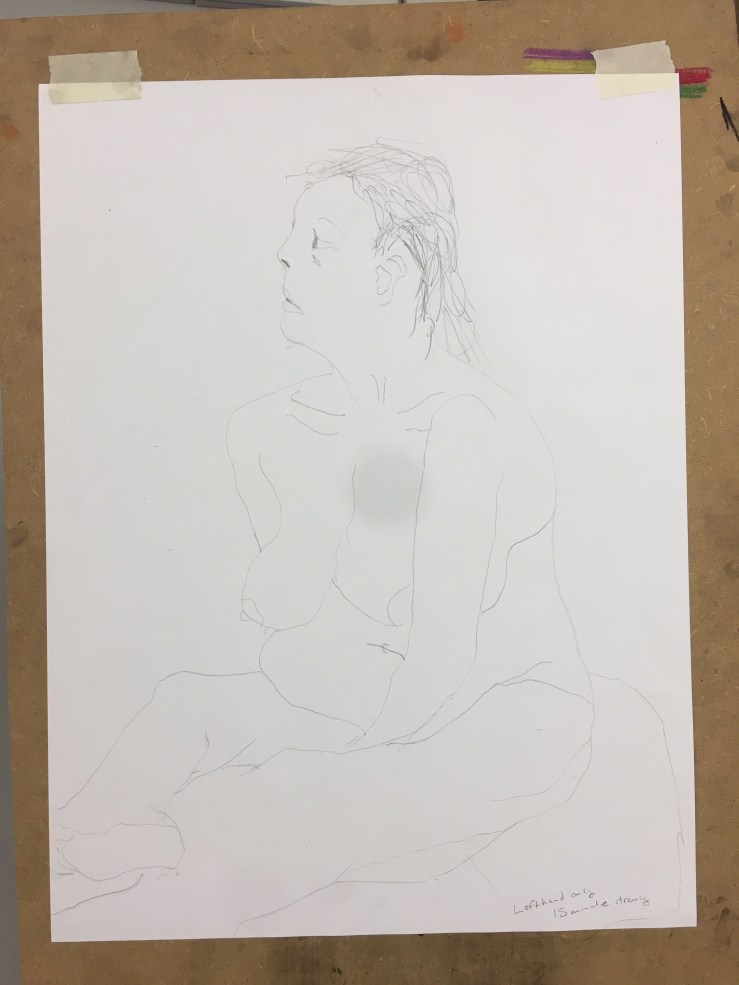
Warm up life drawing exercises

J. P. Guilford, a psychologist, peppered his learning theories with “creativity” and the word took hold, sticking through a common usage from the 1950s onwards.  Guilford’s conceptual definition broke creativity into component parts: as a problem that could be solved.  In this way, creativity was recognized as a set of skills that might be taught.  By the 1980s, curriculum had teased art making, “creating”, into a progression of increasingly complex building blocks (and why, perhaps, creative making is widely encouraged in primary schools, and then subtly, through omission, discouraged in secondary schools in favour of learning that supports social efficiency skills (those that will get you a job).  This is my era of formative schooling and it makes me question whether my dogged pursuit of “learning to write” by searching and reading so many (too many) books on writing (instead of just getting down to the paper and practicing and exploring more freely, in the Froebel manner) is hindering my progress.  I think it is.  

More recently, the concept of creativity has embraced and shifted into the idea of creativity as social power: through creativity we are able to reform or revolutionize the world.  I don’t know about you, but I feel an intense pressure to use my art toward the greater good.  The pressure is immense.  It can be, and has been, paralyzing.  

The variety of conceptual legacies continue to percolate and bubble our modern sociocultural beliefs about what the definition of “creativity” is.  Presently, we draw and squeeze together all five ideas. By looking backwards, following this etymological roller coaster, I’m beginning to understand the lenses I allow to cloud my artistic practice.  If knowledge is power, then at least I can face the blank page with a little less reservation.  

(1) Trevor Strong

I see you there, in the dark: thank you.

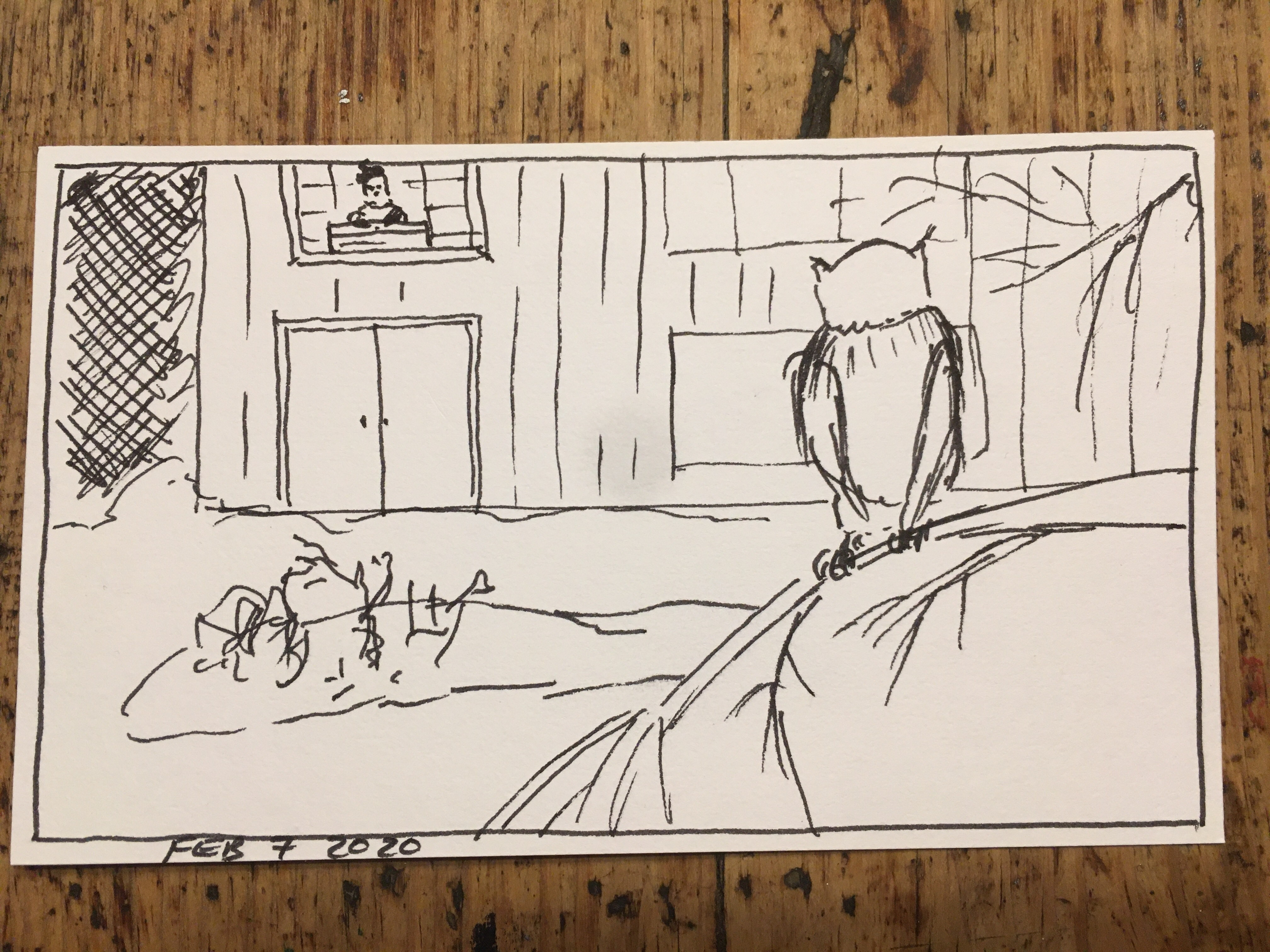
Early morning writing—this last week or so—I’ve heard an owl hooting from somewhere close in the backyard.  It’s wonderful listening to its song of wisdom calling out from the dark. 

A common cultural impression of the writing life is that it’s a lonely, solitary endeavor. I guess the hours of actual writing can be like that (though, I like the solitary time…I don’t find it isolating in the least). But this is a myth. Really, there is too much encouragement and inspiration offered from fellow creators to be discounted.  

In this same week of listening to the owl’s song, I’ve had wonderful email correspondences about creative process with a playwright, a poet, a concert pianist, and four other writers (four!).  A songwriter shared one of his songs via digital file; a film maker one of his films via FB messenger (the wonders of social media). What gifts!! I walked and talked with an artist (painter), a weekly routine that has become essential, not just for discussing artistic pursuits, but for nourishing my soul and my heart and our friendship. I’ve sat and discussed process with another dear friend while she knit a rainbow-striped heel into a wool sock the colour of an ocean in a storm.  

Also, always, inspiration and encouragement from poems I’ve stumbled across and words gleaned from others’ meanderings in books.  This week: Ross Gay’s beautiful collection of tiny essays, The Book of Delights, poems by Laura Gilpin and Bukowski, and a collection of fables edited by Rawi Hage, Lisa Moore and Madeleine Thien

Flip to the acknowledgements section of any book and you will see there are paragraphs (pages!) of people to thank for their contribution to the pages one holds in one’s hands.  The songs calling out from the dark.  

One does not glide to glory without a supportive wind.  The creators and makers (all of you – mechanics, gardeners, bread bakers, chefs etc.) I know, and continue to meet while pursuing my art, expand this glistening net[work] to enrich my life beyond the beyond.  I know I’m blessed by your words and thoughts and I’m grateful your gifts help my own writing to swoop and soar on beating wings.  

A Shaky Devotion

Sometimes, the right words of encouragement arrive at the point when you most need them. 

In writing workshops, when pressed to write (without thinking too much) in response to creative writing prompts, my writing reveals some beautiful phrases that retain spontaneous energy and emotional authenticity, the magic every writer wishes for. I believe in these small beauties…they embody a promise: I can produce good work.  

I’ve been trying to cultivate the same playfulness, the letting go, in my regular writing practice.  For the first few years, it seemed easy (easier?). But, the more I study the craft, the more I practice and revise, the more I read and read to understand the deeper aspects of literary technique…well, the harder it is, it seems for me, to echo the spirited performance on the page.   

I’ve contracted, what Philip Pullman so accurately diagnoses in his essay, Heinrich von Kleist: “On the Marionette Theatre”, subtitled, Grace Lost and Regained, a “self-consciousness” in my writing.  Through knowledge, I’ve lost the “wonderful freedom and expressiveness—the natural grace—[children] bring to such things as painting [writing]”.  I’m verklempt.

And I’ve been lamenting and grieving the loss…mourning I will never regain my original (and beautiful and spontaneous) innocence. 

I’m stuck in the gap perfectly articulated by Ira Glass

“What nobody tells people who are beginners — and I really wish someone had told this to me . . . is that all of us who do creative work, we get into it because we have good taste.

But there is this gap. For the first couple years you make stuff, and it’s just not that good. It’s trying to be good, it has potential, but it’s not. But your taste, the thing that got you into the game, is still killer. And your taste is why your work disappoints you. A lot of people never get past this phase. They quit.

Most people I know who do interesting, creative work went through years of this. We know our work doesn’t have this special thing that we want it to have. We all go through this. And if you are just starting out or you are still in this phase, you gotta know it’s normal and the most important thing you can do is do a lot of work. Put yourself on a deadline so that every week you will finish one story.

Ira Glass

It is only by going through a volume of work that you will close that gap, and your work will be as good as your ambitions. And I took longer to figure out how to do this than anyone I’ve ever met. It’s gonna take awhile. It’s normal to take awhile. You’ve just gotta fight your way through.”

Philip Pullman’s essay intensifies Glass’s gap to illuminate my short-sighted grief over the loss of childish creative abandon: “if we want the wisdom that comes with experience, we have to leave the innocence behind.”  

What is most encouraging though, and has lifted a weight from my shoulders I hadn’t realised I was carrying, Pullman explains, “ …eventually, after great study and toil…[there] will be better, deeper, truer, more aware, in every way richer than…[what one] could achieve [as] a child.”

And then this in my email inbox (there’s no mistaking serendipity), Robert McKee’s latest update about the reality of writing story:

“No matter your chosen medium, remember this: it will take you ten years to master your art…It takes many years of work, but the disciplined writer knows that given determination and study, the puzzle of story yields.” 

Robert McKee

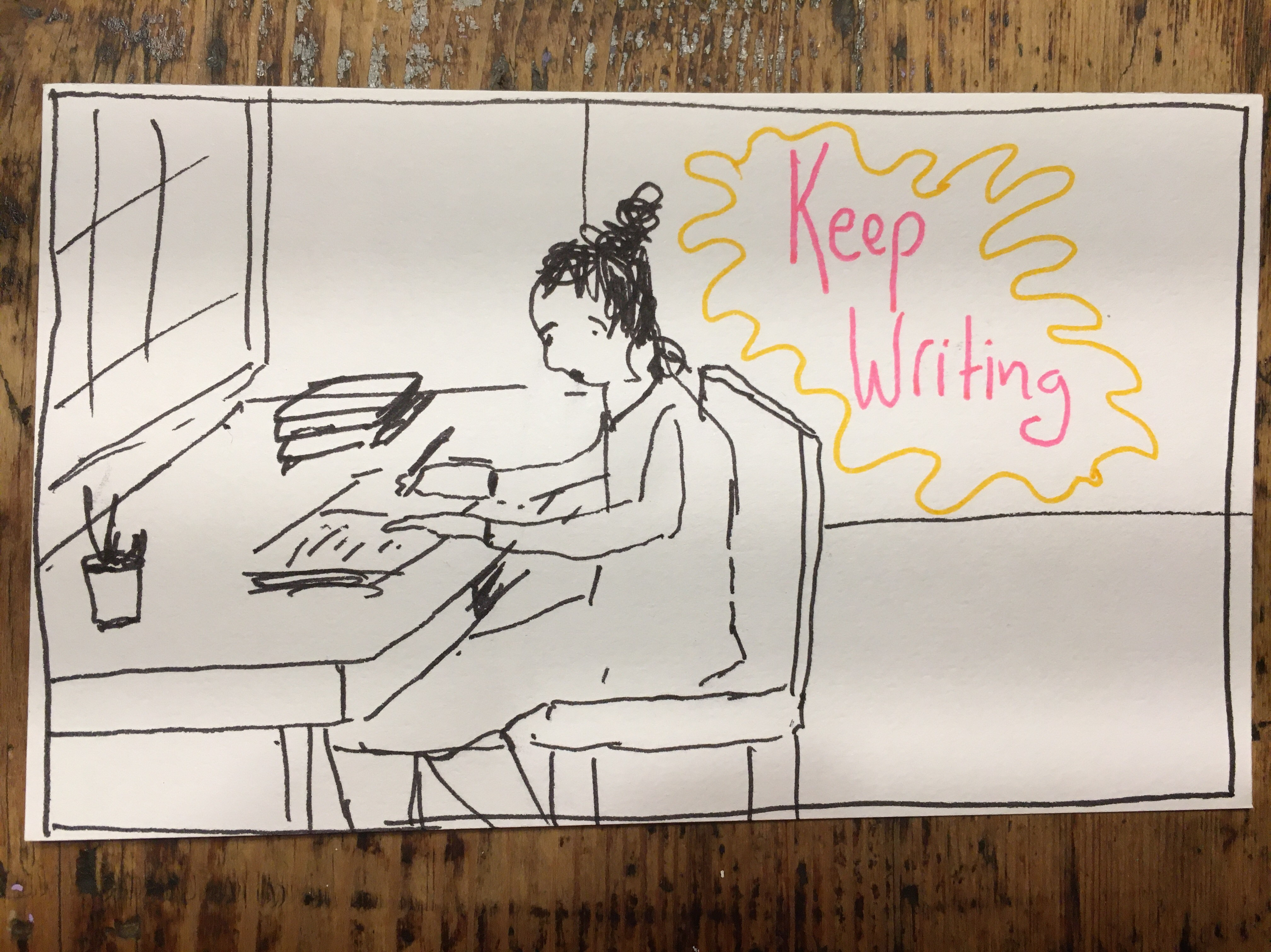
Prescription: keep working.