
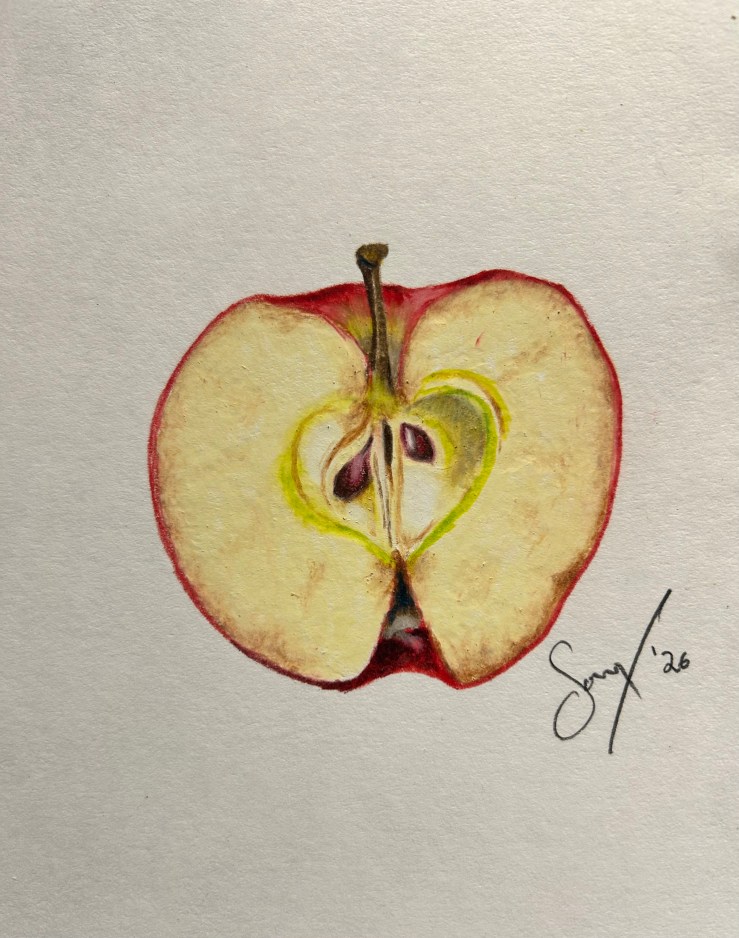
I feel like I’ve forgotten how to write.
But I’ve learned this is a symptom of writing through difficult emotional material. I’ll get to this in a moment.
But also, my brother and I, with steady support check-ins from our two sisters who live far away, moved my dad into a long-term care home on Thursday. What do support check-ins look like? A group text that swings between commenting on the weather, “it’s D-day” (i.e., dad day), football pool (my brother and my youngest sister bet competitively on these things), summaries of communications with the regional care coordinator, gratitude, compliments for the work we’re doing, slides into inappropriate absurdity (e.g., in response to a picture of a rubber tote/bin for packing dad’s ‘stuff’ in, “I don’t think dad will fit in there”) and frequent digressions into movie quotes as our tried and true distraction technique from feeling sad (e.g., Even if you were Jeffrey Dahmer we would love you[1].). Our zoom calls follow the same format. If we were assessed on our movie quote talent, I score dead last[2]. Nyree is the clear winner, though Steve and Ana get bonus points for obscure and particularly precise placements, dropping them into conversations where they resonate multiple meanings.
I’m also trying to integrate these interactions in the novel manuscript because I find them hilarious and they serve to break up some of the heavier emotional passages in the story. It’s not easy. Also, it’s a technique that could fast become tedious for a reader…so I try to use them judiciously. Because the movie quotes generally draw from older films, I’ve started to incorporate bare bones scenic information in a footnote (see footnote #1 as an example) to be able to ground the quote for readers unfamiliar with the quotes or the movies from which they are drawn. I’ve created a ‘style guide’ for myself so that the way I integrate these aspects into the draft manuscript is consistent, both for inline text and footnotes. The style guide has been added to as the chapters unfold and I think I have it down now (after 23 chapters, eye roll).
I like the movie quotes because their placement, both in conversation and in the novel, create layers of meaning that resonate and riff off deeper communications. So, for example, for that quote above, the reference to a serial killer is a tacit admission between my siblings and I that we know moving dad into long term care is tantamount to ‘killing’ his freedom. He would certainly feel this way. Dad has suffered mental illness for many years and, in recent years, cognitive decline. In a way, we have taken serial steps removing his freedoms…this is very hard to write without providing comprehensive context. The movie quotes are how my siblings and I use a sort of shorthand language to forgive each other this pain. Now that I’m writing this out here, I have no idea if I can make it work in the long project….it’s a lot more complicated…almost like integrating a second language[3].
I’m officially halfway through my sabbatical time off work but I’m just under the halfway point of the novel manuscript, currently writing chapters toward section four (it’s 70k+ words now).
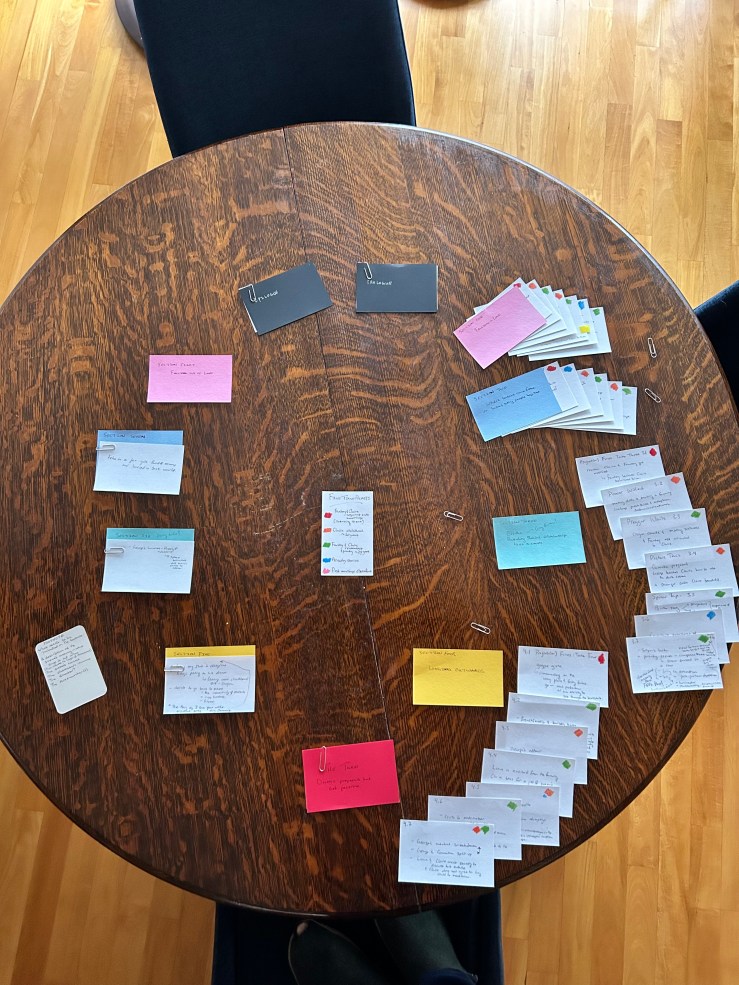
I’m trying to hold on to the ring structure of this project…it’s slippery[4]. As the writing unfolds, the structure wobbles and new patterns are revealed. I continue to write forward, getting content in….the clay that I’ll be able to shape as and when the whole is complete. But I’m finding that Claire, the novel’s protagonist, is kind of heading toward a breakdown…not in the abrupt psychotic break sense, but of the more insidious kind, the breakdown of self-hood brought on by years of sleep deprivation and (undiagnosed) postpartum depression[5].
It’s hard to write. In fact, I haven’t really been able to write it. All my practice and acquired skills related to creating moving pictures through imagery and figurative language, the gymnastics of syntax, the elegance of rhetoric, the precision of diction…it’s all been fucking tossed into the air and what arrives at the page is staccatoed wooden prose devoid of …well, everything I admire in other writers’ writings.
So, I’ve been muscling through—there’s no other description for it—and allowing the shitty writing to be put down on the page. If I don’t, I’ll just stop. I feel like, when I round the turn at the close of section four, the second half will be easier to write (less emotionally volatile anyway).
It has also been hard to get the humour in…feel like I’ve misplaced it somewhere.
So yeah, I feel like I’ve forgotten how to write.
But. I keep going[6].
In the magical ways these things happen, how the feathered tip of positive support brushes my cheeks to wing me aloft after these deep down-drafts, my sister, Nyree, who teaches in northern Ontario, reached out to tell me she had used a story I had written when I was ten years old for her class “to model what a fifth grader can write”. I didn’t even know she had a copy of that story. Yet here she was, reaching out through the ether to remind me how I’d written a story way back then that was noticed and appreciated and that I had read to the whole school on Remembrance Day in 1984. She texted about her students: “they loved the part about the first Coke, and how it tasted awful!”.
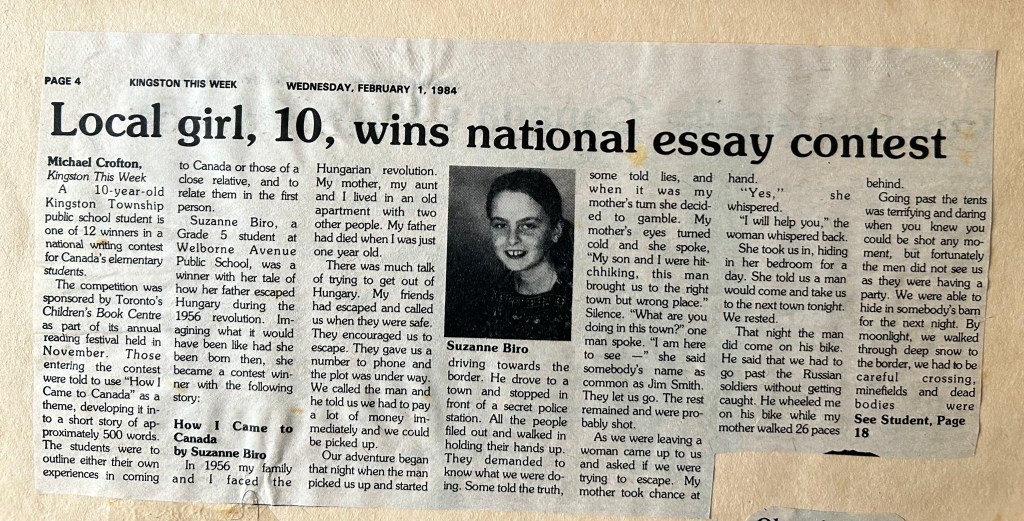
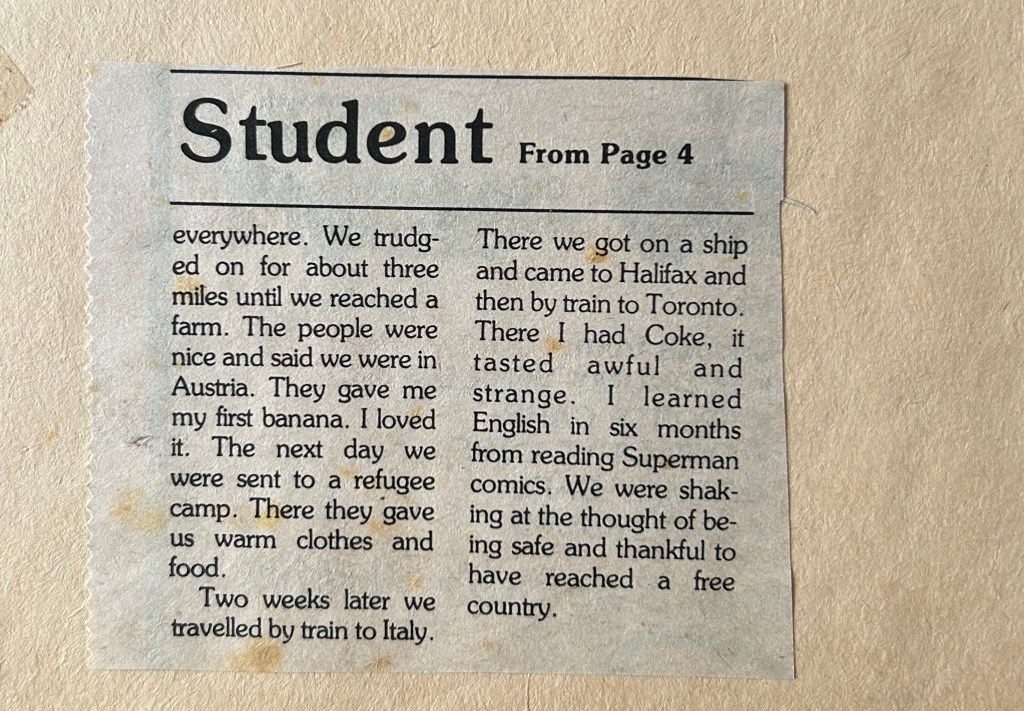
And, trying to reassure myself of my writing, to tell myself I can still do it, I read back through first draft responses to writing prompts and thought, well, I’ll read a couple here. Reassure myself I have a voice. Reassure myself that, though my voice, my writings, waver, they still sing, in their own way, to reach you.
[1] This is a line spoken by character Mary Schlichting, played by Lily Tomlin, in the 1996 dark comedy film Flirting with Disaster, written and directed by David O. Russell. Mary is expressing unconditional love to her son Lonnie (Glenn Fitzgerald) when he feels threatened by meeting Mel Coplin (Ben Stiller) who is his biological brother, but who was adopted and raised in another family. They are all meeting for the first time.
[2] The irony of this is not lost on me. I am too slow in our conversations to guess the quote or come up with the next line (this is the game, when someone drops one into a conversation) …so instead, I’m taking my time and inserting them into ‘imaginary’ conversations in a written novel. There, of course, I’m queen (she said in a tiny quaking voice not at all sure).
[3] It’s almost as if, in the draft novel, I teach the new language to readers and then apply it. But also, thank goodness, people are very used to quoting movies. I never have trouble finding quotes with a quick google search and often the clips are available through YouTube or even searchable databases. I like how pop culture weaves seamlessly into conversations, I find it fascinating.
[4] Quick summary: ring structure moves a story through a circular structure, allowing for digressions and tangents from the main story arc but reorienting the reader to the narrative through line using repeated text forms (whether same words or same phrases or same paragraphs or same [insert text form]…the repetition technique just needs to apply a consistent form to remind the reader where we are and bring the reader back to the main storyline). Halfway round the circle there is a turn (kind of like a story climax). Then the story winds back on itself, repeating patterns from the first half—but not exactly, instead, in mirror (or opposite) ways—to return to the beginning where the story began. It’s the mirror aspects I feel I’m going to have trouble with…but time will tell.
[5] Despite the writing being choppy and limp, memories have surfaced through the act of writing …ones I suppressed and pushed deep down. I really don’t like who Claire became back then (hollow, meek, submissive, lacking self-confidence), when her daughters were very young and Fanboy and she were building their house. The novel really tries to understand this and follow Claire’s thinking and decision making over time…and, it seems, this particular section related to her mental decline…I’m not ready or equipped to write it yet. So, it’s rendered poorly. BUT the scaffolding is written.
[6] I can feel how the plot elements in section four are …under tension. This is what I’m writing now, as if the previous three sections have been the gradual set up for “what happens” before the tension breaks and a new path for Claire commences in the second half of the novel to its inevitable end.
Discover more from Process Peace
Subscribe to get the latest posts sent to your email.


Thank you Emily, it’s wonderful to read this. Maybe the writing of it feels so painful it’s hard to see it myself.
LikeLiked by 1 person
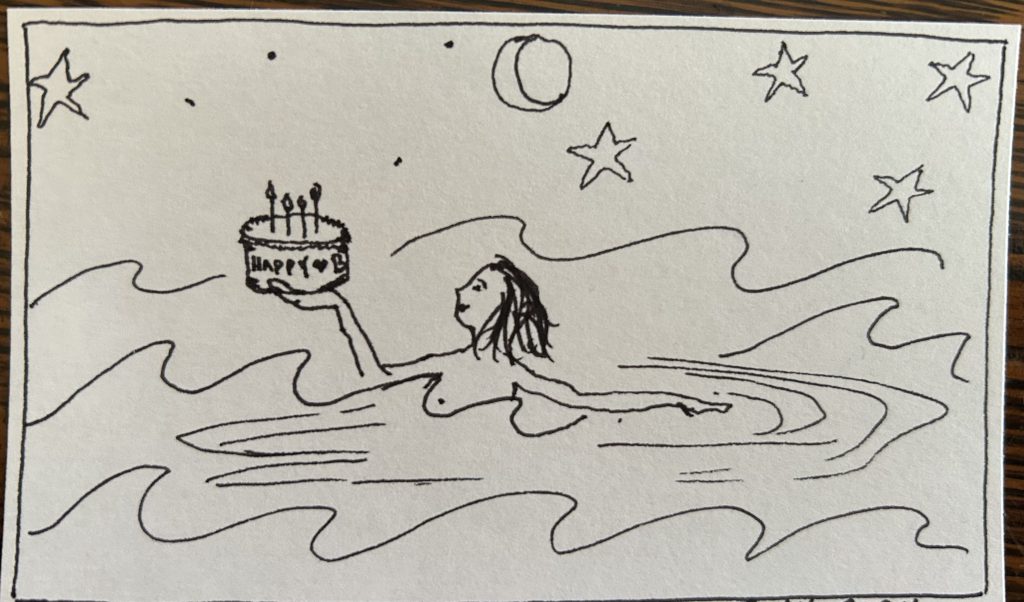
Morning! Love this post – and that drawing is amazing. Also, I read two of your latest chapters yesterday and will get to the other this weekend, but what I’ve read so far is, I think, some of your best work, so less of this self doubt please. Xxx
>
LikeLiked by 2 people